Behind Every Claim, Thousands of Pages of Proof
Key Takeaways:
- Every major merger benefit is backed by extensive analysis and evidence. The application’s projections, from new single-line service opportunities across 88,000 county-to-county lanes to faster service, reduced handlings and millions of truckload conversions, are supported by detailed modeling, data and expert analysis submitted as part of the regulatory review process.
- The STB review is built on transparency, scrutiny and an extensive factual record. Nearly 7,000 pages of application materials, independent expert studies, detailed benefit calculations and millions of pages of supporting business records provide stakeholders and regulators the opportunity to review, test and challenge every assumption and conclusion.
- The transaction will ultimately be judged on evidence, not rhetoric. As stakeholders debate the merits of the proposed combination, the STB's process is designed to evaluate the underlying facts, methodologies and public-interest benefits to determine whether the transaction delivers on its projected outcomes.
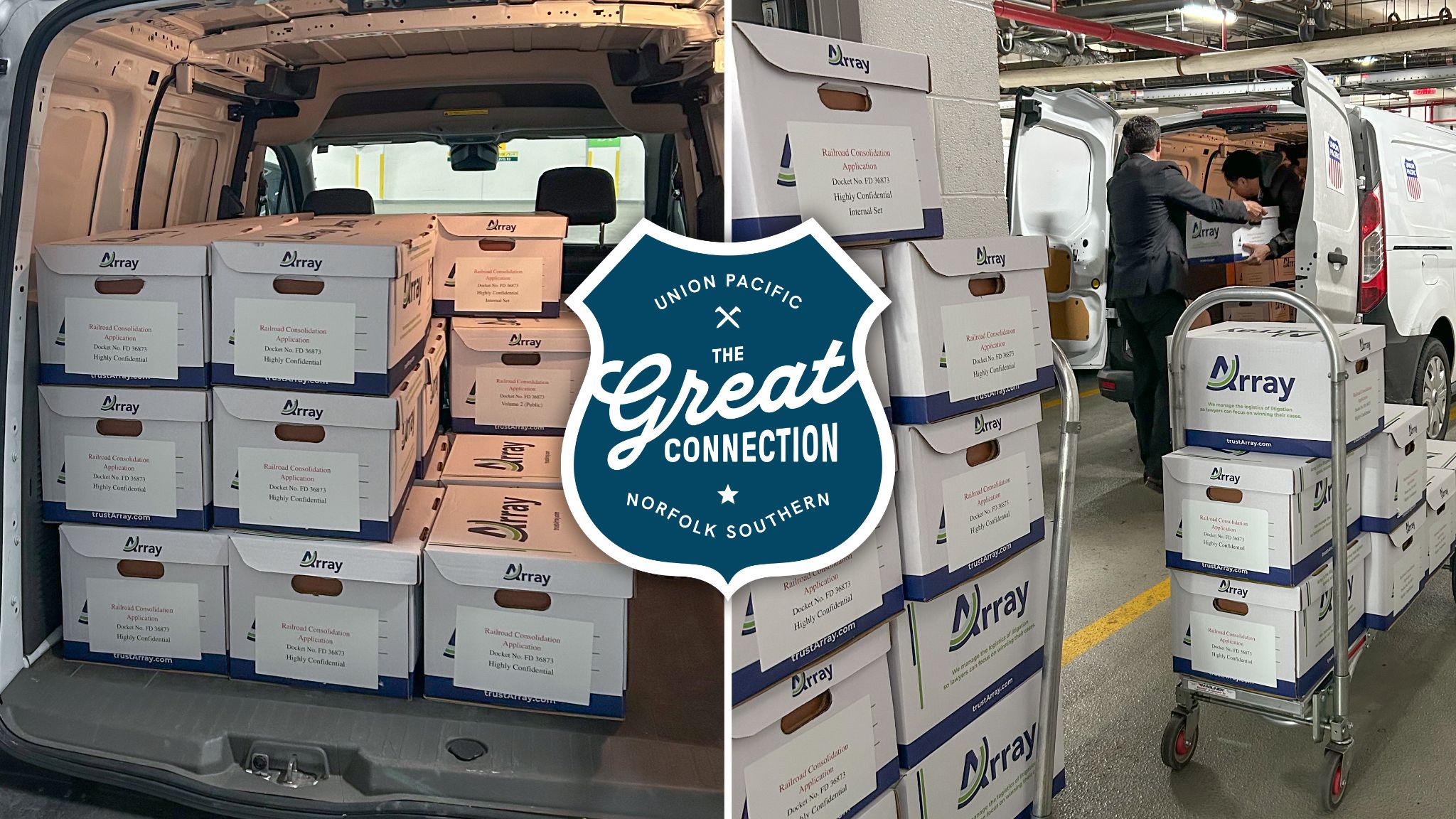
It's easy to make a claim. It's harder to prove one. That's the difference between public rhetoric and a merger application filed with the Surface Transportation Board (STB).
Union Pacific and Norfolk Southern's application spans nearly 7,000 pages because every projected benefit, operational improvement and competitive impact must be supported by evidence.
The most important part of the application isn't the conclusions. It's the work behind them: the studies, modeling and analysis that support every major finding.
The Evidence Behind the Claims
When critics question the benefits of a transcontinental railroad, they're often questioning findings supported by detailed modeling and analysis, including:
- The proposed transaction will create single-line service opportunities for more than 88,000 county-to-county lanes nationwide.
- The merger will create faster, more reliable service by eliminating more than 2,550 rail car and container handlings every day and reducing rail movements by approximately 65,000 car-miles daily.
- New single-line service will drive conversions of approximately 2.1 million truckloads annually from highways to rail, reducing roadway congestion and creating a more efficient freight transportation network.
- That shift from higher-cost truck transportation to lower-cost rail service will generate approximately $3.5 billion in annual savings for shippers, helping reduce transportation costs across supply chains and make American goods more affordable.
Taken together, these findings point to a single, overarching conclusion: a combined railroad will move freight more efficiently, strengthen service and attract millions of truckloads from congested highways to rail.
The Proof Behind the Projections
But the findings are only part of the story. Equally important is the record behind them. This isn't a political campaign driven by rhetoric. It's a regulatory review built on evidence.
- Approximately 7,000-page merger application supported by hundreds of gigabytes of workpapers that address every element of the STB’s major merger regulations, including detailed operating, marketing, capital investment and service assurance plans.
- Comprehensive independent analyses from outside economists and industry experts addressing competitive impacts across the combined 52,000-mile network and more than 20,000 shipper facilities, and the projected diversions of traffic from other railroads and trucks.
- Detailed calculations of quantifiable public benefits, including safety and environmental benefits.
- Extensive collaboration with the Federal Railroad Administration and the STB’s Office of Environmental Analysis to provide additional merger-related information.
- More than 4 million pages and nearly 4,000 gigabytes of ordinary-course business data produced in discovery to support extensive stakeholder review.
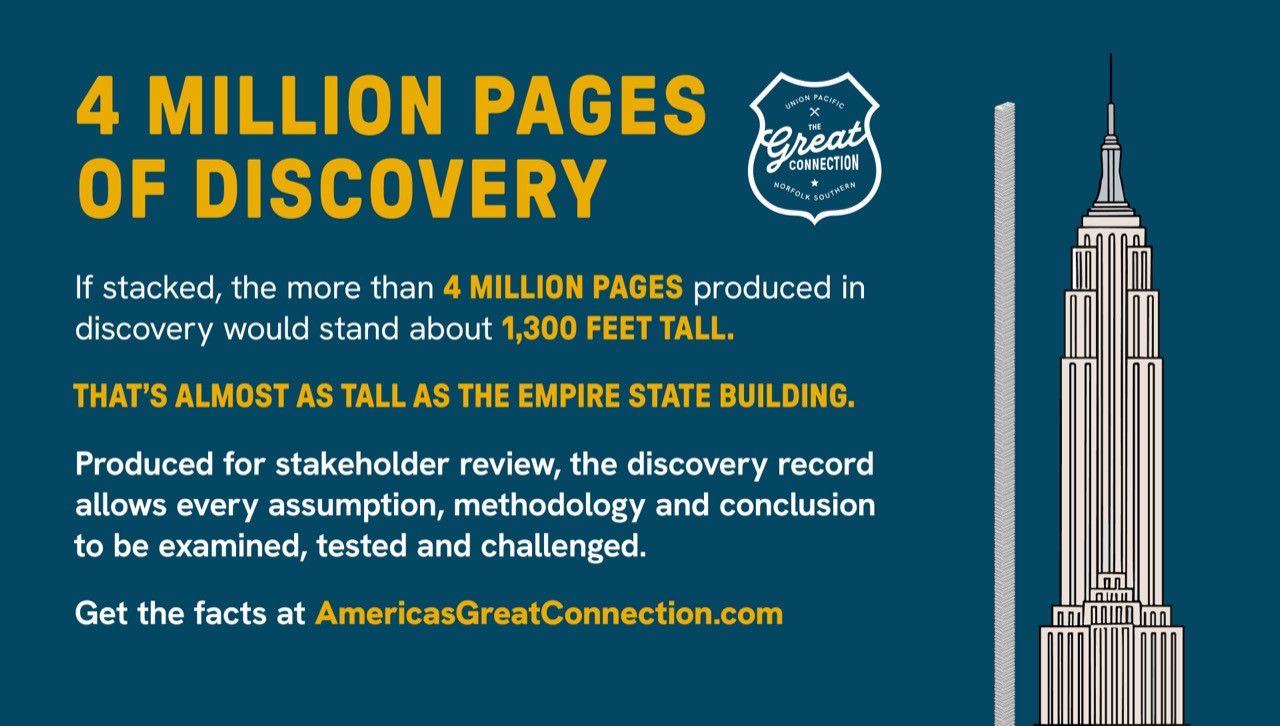
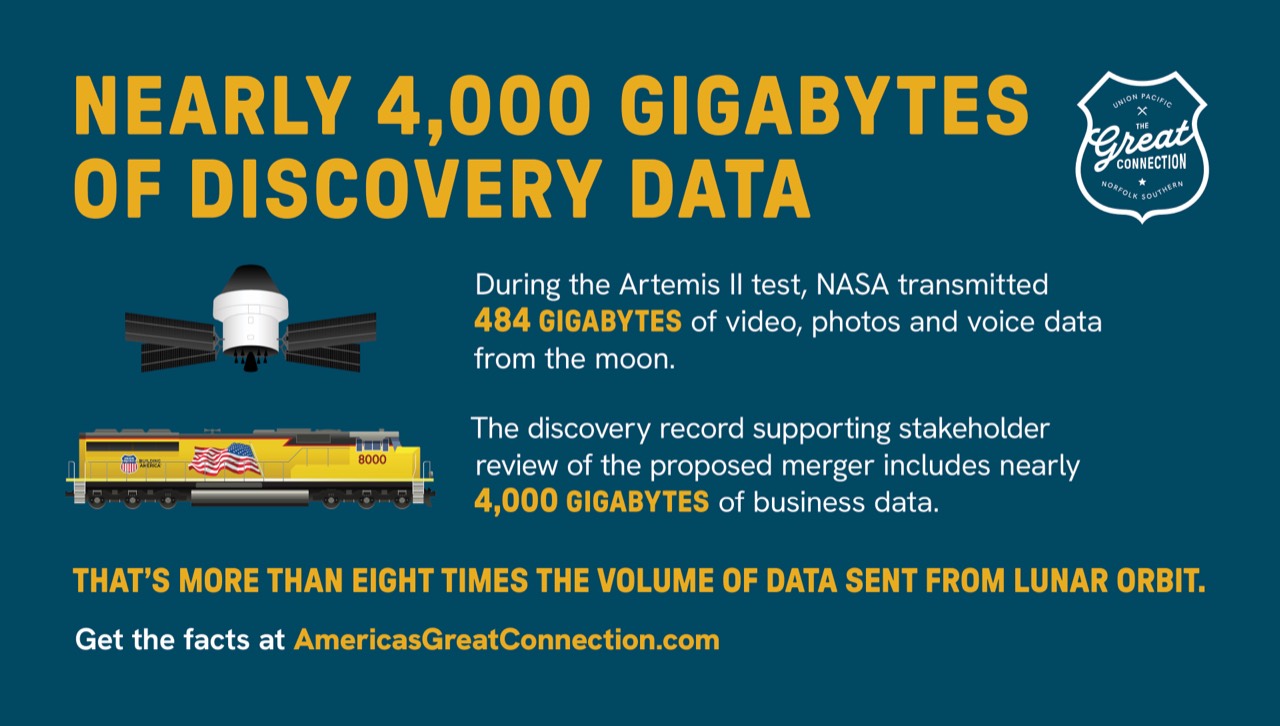
The volume of material Union Pacific and Norfolk Southern have placed in the record itself isn't the point. The point is that every assumption, methodology and conclusion can be reviewed, tested and challenged. That's exactly how the STB process is designed to work.
The Facts Matter
The STB's review process exists for a reason: to separate assertion from evidence.
Stakeholders will continue to hear competing perspectives on this transaction in the months ahead. That's an important part of the process. But ultimately, the question isn't whose argument is the loudest. It's whose argument is best supported by the record.
The STB will evaluate the evidence, test the analysis and determine whether the transaction serves the public interest. Ultimately, that's the standard by which this application will be judged.
Please review Union Pacific’s cautionary note regarding forward-looking statements.