How a Union Pacific-Norfolk Southern Combination Will Strengthen Automotive Supply Chains
Key Takeaways:
- A Union Pacific-Norfolk Southern combination will create faster, more efficient automotive supply chains. New single-line routes for both automotive parts and finished vehicles will reduce handlings, eliminate unnecessary interchange delays and shorten transit times on key lanes, helping manufacturers move freight more reliably from suppliers to assembly plants, ports, distribution centers and dealerships.
- Integrated network planning will improve equipment availability and shipment visibility for automotive customers. Managing autoracks across a unified system will better match equipment supply with demand, reduce imbalances and provide customers with greater confidence that equipment will be available when and where it’s needed.
- The combined railroad will expand transportation options and market access across the automotive supply chain. By connecting complementary eastern and western rail networks, the transaction will create new origin-destination pairs, provide more direct service options and make rail a more competitive transportation choice in markets where freight often moves by truck today.
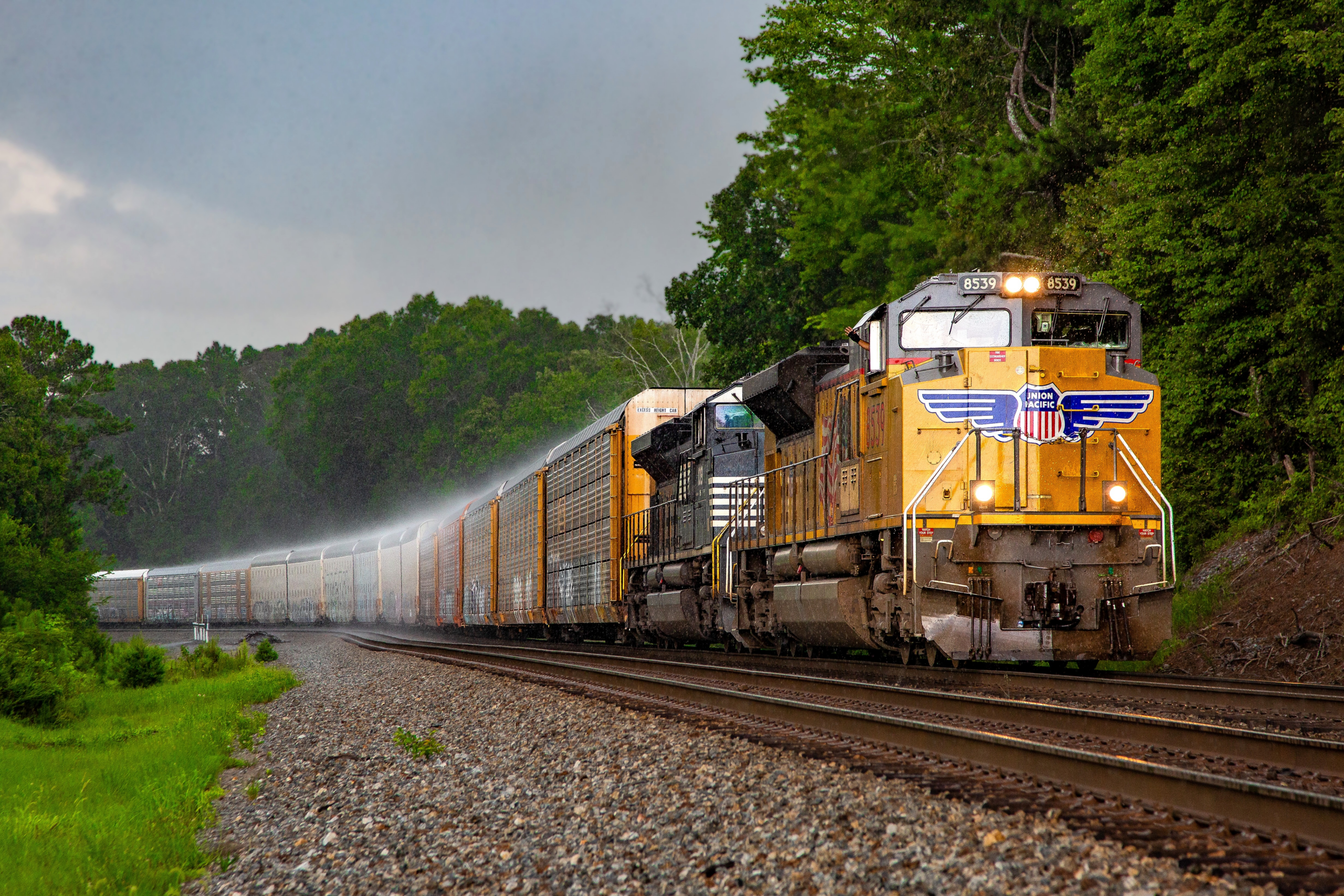
America built its automotive industry on rails. For more than a century, railroads have moved the steel, parts and materials that keep assembly lines running, and carried finished vehicles from factories to markets across the country. As the auto industry has evolved, so has the supply chain supporting it. What has remained constant is manufacturers’ need for transportation networks that are reliable, efficient and built for growth.
The proposed Union Pacific–Norfolk Southern combination is an opportunity to strengthen that network for the next generation of American automotive manufacturing. Combining Union Pacific’s western network with Norfolk Southern’s eastern network will create new single-line routes for automotive customers, reduce handlings and provide opportunities for faster, simpler and more efficient transportation.
Fewer Handlings, Faster Routes, Greater Reach
New single-line routes will improve the movement of automotive freight across the country. For example, finished vehicles moving from Kentucky to California will avoid handlings in Alabama and Arkansas, potentially reducing transit times by approximately two days.
The combination will streamline traffic bound for Mira Loma, California, by eliminating an additional handling in Kansas City and moving eligible traffic more seamlessly to Southern California. More broadly, the combined network will connect automotive facilities and markets across Southern California, Texas, the Midwest, Northeast and Southeast, creating new origin-to-destination options and helping make rail more competitive with trucking, particularly for customers in the middle of the country.
The benefits begin before it’s time to ship a finished automobile, with streamlined moves available to manufacturers shipping engines, transmissions, steel, tires, components and other parts between suppliers, assembly plants, ports, distribution centers and dealerships.
Improving Equipment Availability and Visibility
The opportunity of a combined railroad extends beyond new routes. Automotive customers also need a reliable supply of empty autoracks in the right place at the right time.
Today, railroads manage equipment around the needs of their individual networks. A combined Union Pacific–Norfolk Southern network will instead plan autorack movements across the full system, better matching available equipment with customer demand. For example, empty racks from Union Pacific operations in Denver will help supply Norfolk Southern-served automotive facilities in Kansas City and St. Louis.
Nationwide integrated planning will improve equipment availability, reduce imbalances and give customers greater confidence that rail cars will be available when needed. It will also provide better visibility into equipment movements and arrival times, helping automakers more effectively plan production, labor, loading and outbound shipments.
More Options in More Markets
New single-line options will be in addition to the rail, trucking, port and terminal choices shippers have today. A customer shipping from South Carolina to a Western destination, for example, will have the opportunity to evaluate a new Union Pacific–Norfolk Southern route alongside existing alternatives based on cost, service, capacity and reliability.
The result will be greater flexibility and more practical choices for automotive customers, allowing them to select the origin, destination, route and transportation provider that best meets their needs.
A Stronger Rail Option for Automotive Customers
Rail is most competitive when it is simple, reliable and easy to use. By connecting complementary networks and eliminating unnecessary interchanges, the Union Pacific–Norfolk Southern combination will create more direct and efficient options for moving both automotive parts and finished vehicles across the country.
The companies estimate the combined network will create approximately 88,000 new single-line county-to-county lanes across the broader freight system, expanding the markets where rail can compete effectively for freight that might otherwise move by truck.
For automotive customers, that means more choices, more direct connections, fewer handoffs and a stronger rail option capable of supporting an increasingly complex and competitive U.S. automotive supply chain.
Please review Union Pacific’s cautionary note regarding forward-looking statements.