
Jobs-For-Life Guarantee Gives Railroaders Long-Term Security
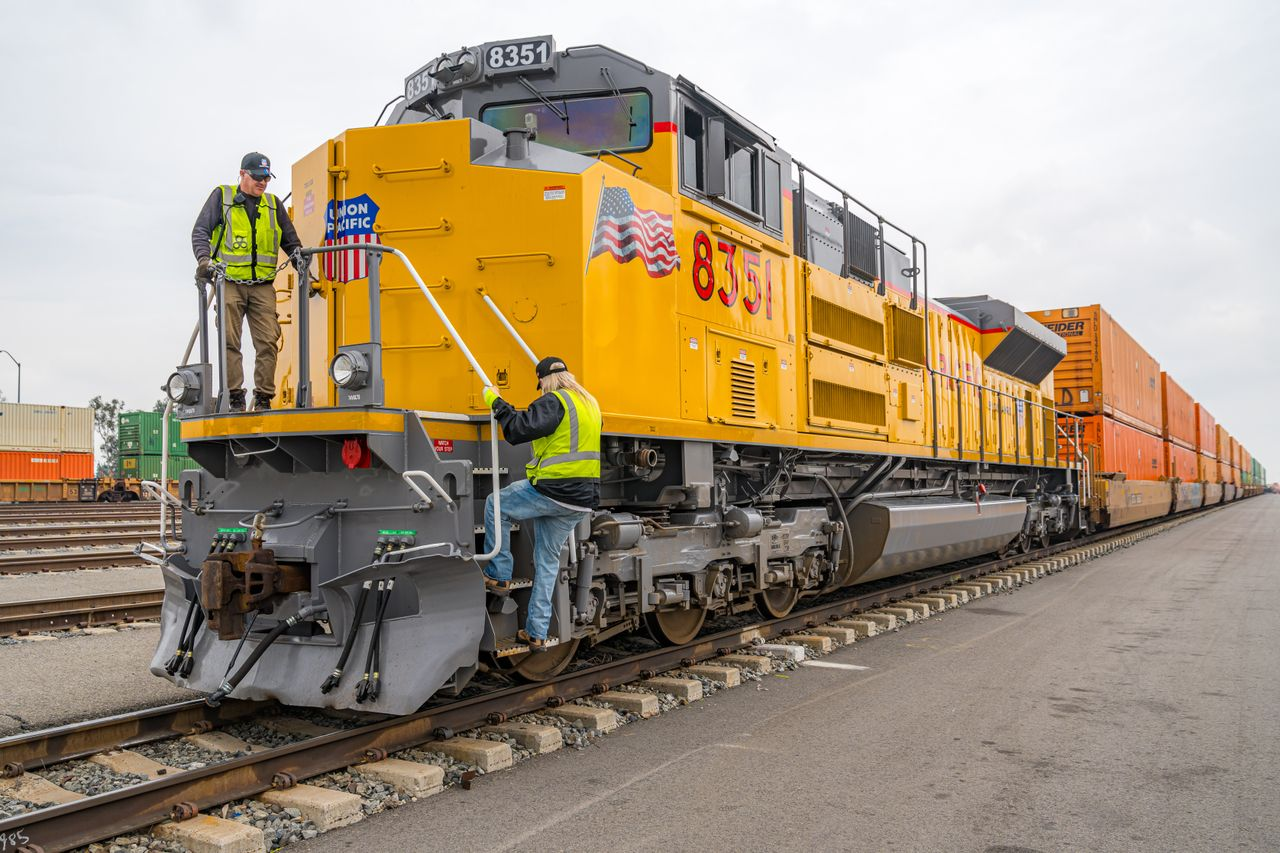
One year after SMART-TD and Union Pacific reached their jobs-for-life agreement, SMART-TD President Jeremy Ferguson explains why the union views written lifetime employment protection as a defining benefit for railroaders.
Railroad work is evolving. New technology is reshaping how freight moves and how employees perform their jobs, putting long-term workforce security at the center of conversations about the industry’s future.
That makes one element of the Union Pacific-Norfolk Southern combination especially important: a written jobs-for-life agreement protecting the careers of union employees who have a job at the time of the merger.
Under the agreement, SMART-TD members working at the time of the merger are guaranteed a job for life, subject to the terms of their collective bargaining agreement. Ferguson emphasizes that the commitment is not simply a statement of intent. The protections are incorporated into the union’s labor agreement, giving covered employees a defined framework for their careers as the two railroads combine.
Additionally, the combined railroad expects to add approximately 1,200 net new union jobs by the merger’s third year to support anticipated freight growth — underscoring the principle that growth and workforce stability go together.
Union Pacific’s jobs-for-life commitment — which applies to every union employee, regardless of formal agreement — is in addition to the New York Dock labor protection typically imposed by regulators in large railroad mergers and goes above and beyond.
One year after the agreement was reached, the message remains straightforward: meaningful job security comes from protections employees can see in writing and rely on throughout their careers. The jobs-for-life agreement establishes that foundation for union employees, placing them at the center of the industry’s next chapter.
Next Read: America’s Voices: Unionized Employee Lenson
Please review Union Pacific’s cautionary note regarding forward-looking statements.