The 50% Market Share Myth: What the Data Actually Shows
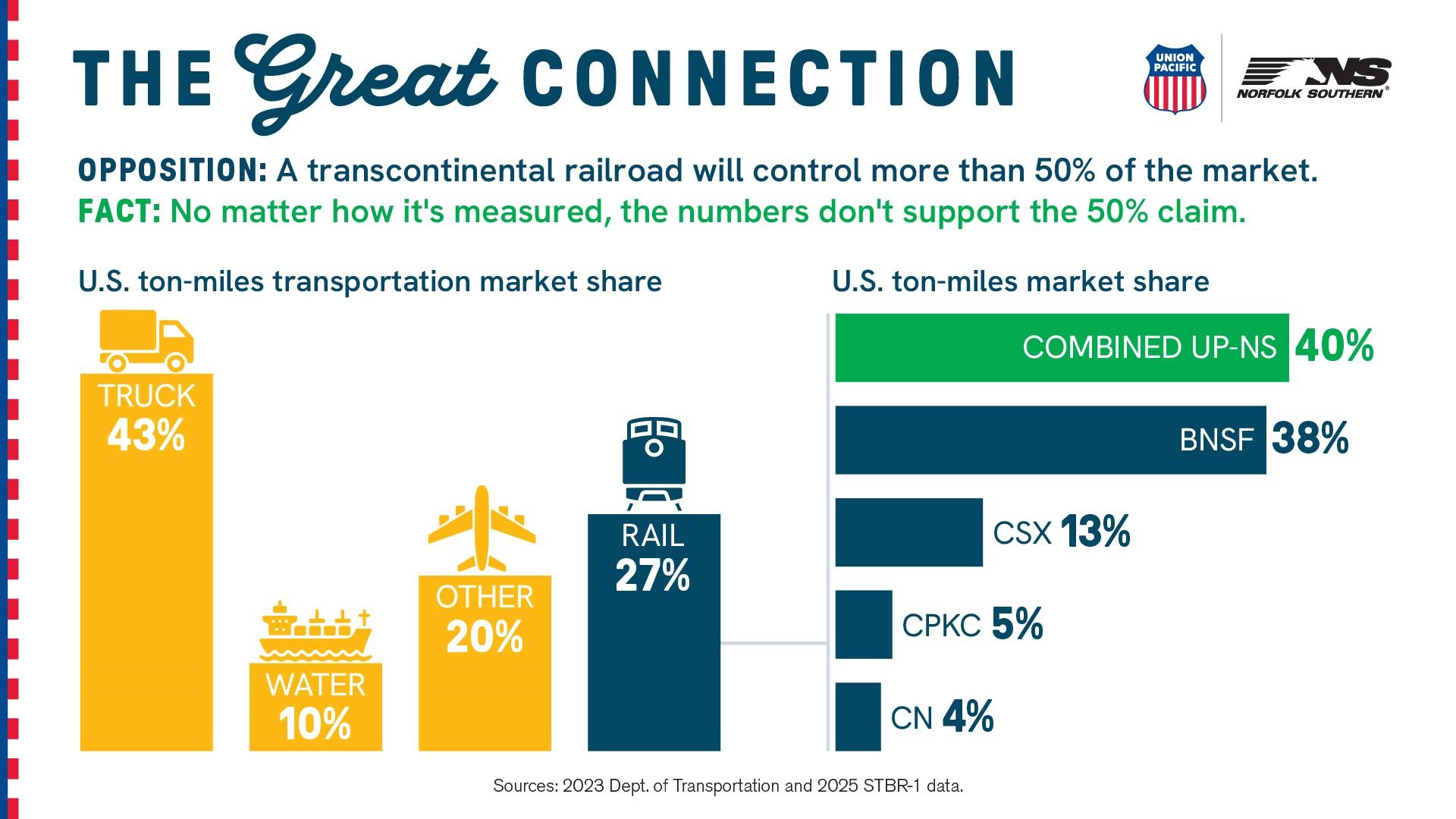
The debate around a transcontinental railroad should be grounded in facts, not rhetoric. Opponents, including competing railroads, shipper lobbying organizations and labor groups, continue to claim that a combined Union Pacific-Norfolk Southern network will control more than 50% of the market. That claim does not withstand scrutiny.
Here are the facts:
- Rail accounts for just 27% of the total U.S. ton-mile transportation market.
- A combined Union Pacific-Norfolk Southern will represent less than 11% of the overall U.S. freight transportation market.
- Within the rail industry itself, the combined railroad will account for approximately 40% of U.S. rail ton-miles.
- Even measuring U.S. carloads, the combined railroad is still less than 50%.
No matter how you measure market share, the oft-repeated "50% market share" claim is wrong. What makes this particularly noteworthy is that these measurements come from publicly available industry data that competitors themselves use and report. The numbers are not in dispute. The narrative is.
Before accepting talking points, look at the facts. They can be verified and they tell a very different story. The Union Pacific-Norfolk Southern combines two railroads end to end to create America's first transcontinental railroad, encouraging stronger competition among railroads, while removing trucks from congested highways.