Building the Future of Rail Together
Author: Josh Perkes, Chief Human Resources Officer for Union Pacific, and Annie Adams, Chief Human Resources Officer for Norfolk Southern | July 22, 2026
Key Takeaways:
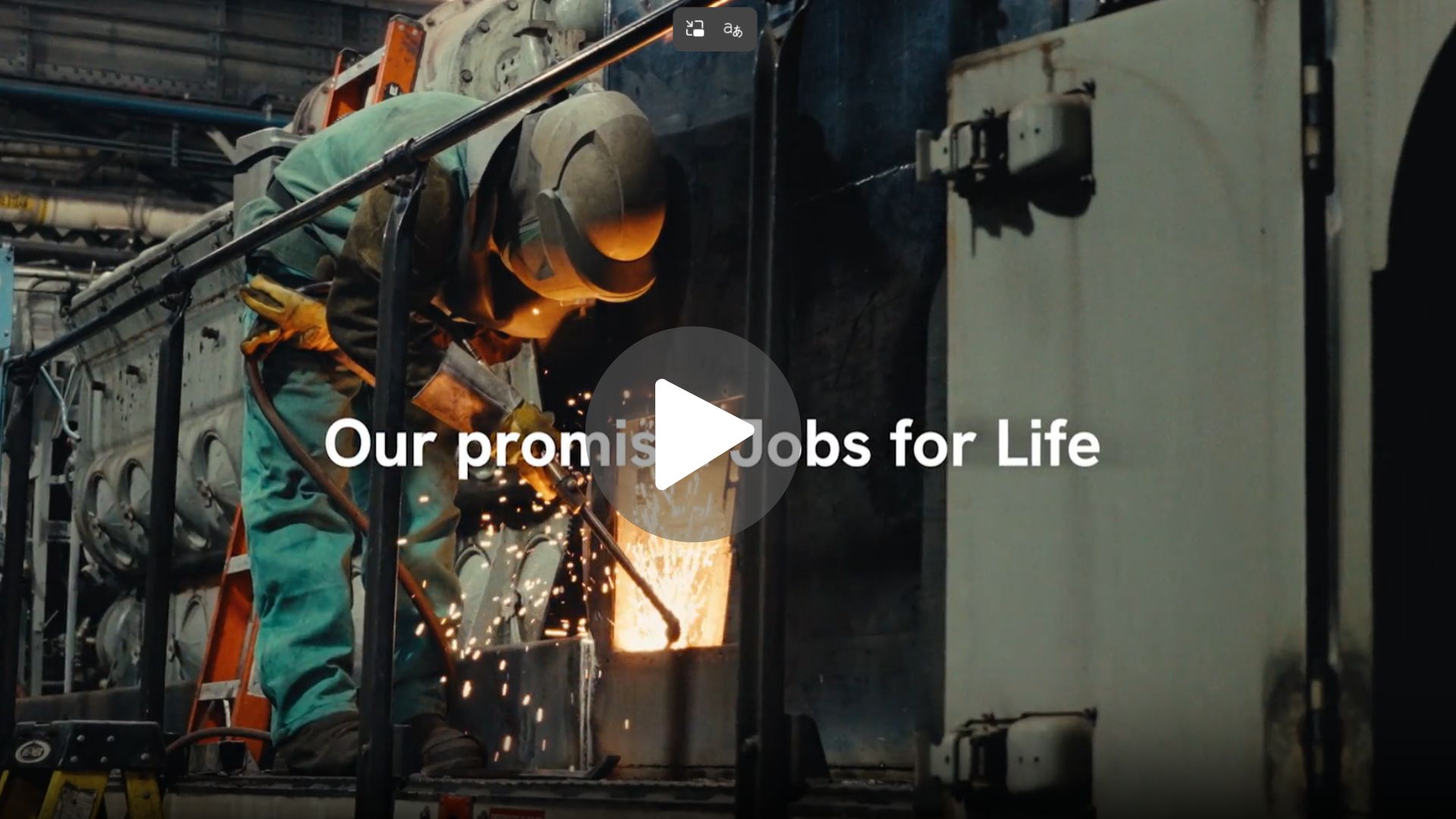
● Every unionized employee working for Union Pacific and Norfolk Southern at the time of the combination will have a job for life. A combined railroad creates new career opportunities across a larger network.
● The unprecedented commitment goes beyond traditional New York Dock Protection. Jobs for life is a promise layered on top of current requirements to provide a new level of protection for unionized employees.
● 1,200 net new jobs are expected within three years of the combination. Union Pacific and Norfolk Southern are committed to building the future of skilled railroaders.
● Every unionized employee working for Union Pacific and Norfolk Southern at the time of the combination will have a job for life. A combined railroad creates new career opportunities across a larger network.
● The unprecedented commitment goes beyond traditional New York Dock Protection. Jobs for life is a promise layered on top of current requirements to provide a new level of protection for unionized employees.
● 1,200 net new jobs are expected within three years of the combination. Union Pacific and Norfolk Southern are committed to building the future of skilled railroaders.

Josh Perkes

Annie Adams
We’re encouraged by the support we’ve received from labor unions that recognize the benefits a stronger national rail network will deliver, including International Association of Sheet Metal, Air, Rail and Transportation Workers — Transportation Division (SMART-TD), American Train Dispatchers Association (ATDA), Brotherhood of Railway Carmen (BRC), International Brotherhood of Boilermakers (IBB), Iron Workers, United Supervisors Council of America (USCA), and National Conference of Firemen & Oilers (NCFO).
Throughout this process, our focus has remained on listening to and engaging directly with the railroad employees and unions that will be part of the combined company. That focus reflects a belief shared by both companies: the future of our railroad will be built by skilled railroaders, and investing in those employees is the best investment we can make.
Protecting Great Careers and Benefits
At Union Pacific and Norfolk Southern, more than 80% of employees are represented by labor unions. These employees helped build two of North America’s leading railroads and will play a central role in building the next chapter of rail transportation.
Our goal isn't simply to preserve jobs – it's to create an environment where railroad careers can continue to grow and thrive for decades to come.
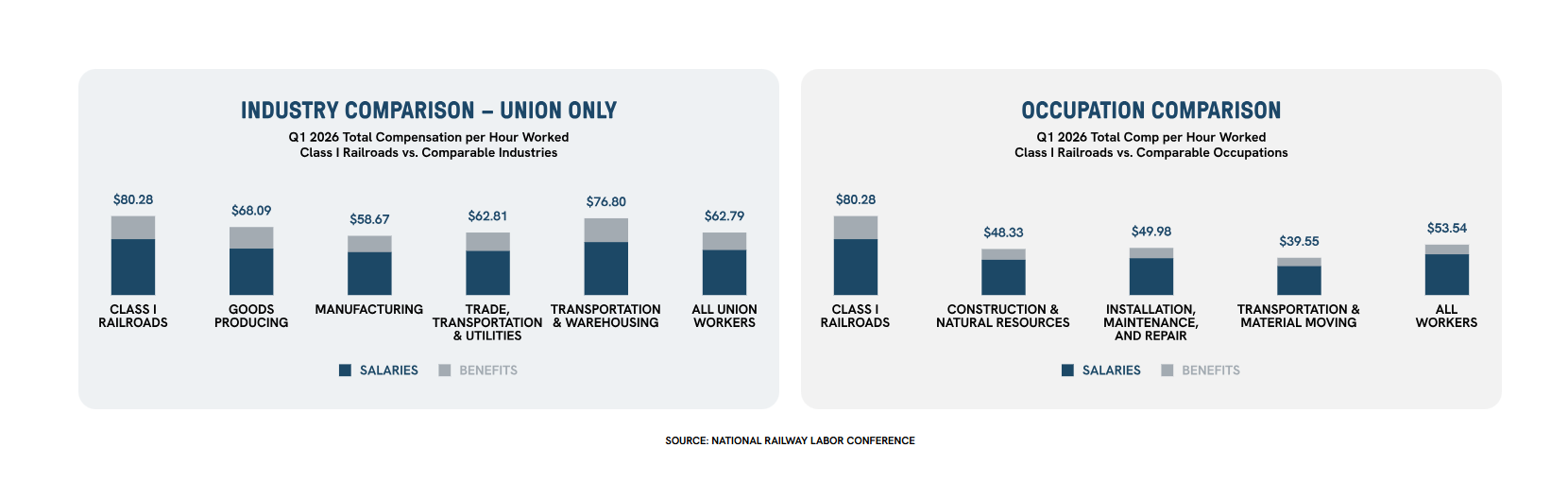
Railroading remains among the best-paid industrial careers in America, with compensation approximately 40% above the national average, retirement benefits that significantly exceed the average Social Security benefit and industry-leading healthcare and training programs. It's one reason average employee tenure exceeds 13 years — roughly three times the national average. The estimated lifetime compensation and benefits over a 40-year career for employees who are unionized averages $13-16 million.
Throughout this process, our focus has remained on listening to and engaging directly with the railroad employees and unions that will be part of the combined company. That focus reflects a belief shared by both companies: the future of our railroad will be built by skilled railroaders, and investing in those employees is the best investment we can make.
Protecting Great Careers and Benefits
At Union Pacific and Norfolk Southern, more than 80% of employees are represented by labor unions. These employees helped build two of North America’s leading railroads and will play a central role in building the next chapter of rail transportation.
Our goal isn't simply to preserve jobs – it's to create an environment where railroad careers can continue to grow and thrive for decades to come.
Railroading remains among the best-paid industrial careers in America, with compensation approximately 40% above the national average, retirement benefits that significantly exceed the average Social Security benefit and industry-leading healthcare and training programs. It's one reason average employee tenure exceeds 13 years — roughly three times the national average. The estimated lifetime compensation and benefits over a 40-year career for employees who are unionized averages $13-16 million.
Employees of the combined company will gain access to some of the best benefits of both companies. Union Pacific empowers employees to advance their education through Union Pacific University, the railroad’s free college tuition program. Every employee across Union Pacific’s 23-state network has access to this opportunity starting on the first day they begin employment. Additional world-class benefits include free counseling and family-life services, company-supported employee assistance funds and an employee stock purchase plan with a company match giving workers a direct stake in the railroad’s success.
As our network grows and more freight moves from highways to rail, we expect increased demand to generate approximately 1,200 net new jobs within three years. Any workforce efficiencies associated with the transaction are expected to be managed primarily through attrition.
Some have asked why certain workforce analyses submitted during the regulatory process include confidential elements. Those materials, which are preliminary projections, are available to appropriate stakeholders involved in reviewing the application through legal and regulatory channels. When it comes to broader release, we’re focused on ensuring such information is provided to employees at the right time, and with as much accuracy and context as possible, consistent with our commitment to communicate clearly, accurately and responsibly.
Looking Ahead
Railroads have connected America for nearly 200 years. Today, we can build on that legacy by creating a transcontinental railroad that will strengthen our economy and expand the reach of freight rail.
But this future won't be built by infrastructure alone. It will be built by the people who operate trains, maintain equipment, serve customers and keep freight moving safely every day. As CHROs, our responsibility is to ensure those employees are respected, supported and positioned for success.
By building on a foundation of trust, partnership and shared purpose, we can create a railroad that delivers lasting value for customers, communities and employees alike.
And we'll do it the way railroads always have: together.
As our network grows and more freight moves from highways to rail, we expect increased demand to generate approximately 1,200 net new jobs within three years. Any workforce efficiencies associated with the transaction are expected to be managed primarily through attrition.
Some have asked why certain workforce analyses submitted during the regulatory process include confidential elements. Those materials, which are preliminary projections, are available to appropriate stakeholders involved in reviewing the application through legal and regulatory channels. When it comes to broader release, we’re focused on ensuring such information is provided to employees at the right time, and with as much accuracy and context as possible, consistent with our commitment to communicate clearly, accurately and responsibly.
Looking Ahead
Railroads have connected America for nearly 200 years. Today, we can build on that legacy by creating a transcontinental railroad that will strengthen our economy and expand the reach of freight rail.
But this future won't be built by infrastructure alone. It will be built by the people who operate trains, maintain equipment, serve customers and keep freight moving safely every day. As CHROs, our responsibility is to ensure those employees are respected, supported and positioned for success.
By building on a foundation of trust, partnership and shared purpose, we can create a railroad that delivers lasting value for customers, communities and employees alike.
And we'll do it the way railroads always have: together.
Next Read: Jobs for Life: A Firm Promise to Union Employees