Opposition Wants To Protect The Status Quo, Not Customers
The opposition wants customers to believe a transcontinental railroad will control more than 50% of the market. The math doesn’t add up.
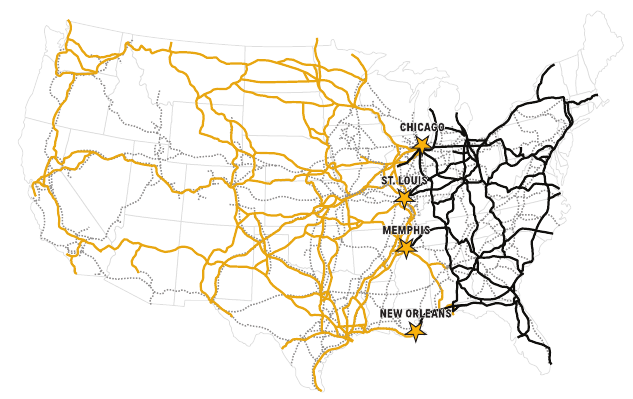
The industry will still have two major railroads in the West and two in the East. What changes is the ability to connect those networks through seamless single-line service.
Do As I Say, Not As I Do
BNSF’s Market Position Today vs. Union Pacific, Based on Actual Freight Movements
Source: Intermodal Association of North America and Association of American Railroads CS54 data.
The Real Competition Is on the Highway
Rail accounts for just 27% of the nation’s freight ton-mile market, meaning most freight moves by other modes. A combined Union Pacific-Norfolk Southern represents less than 11% of the U.S. freight transportation market.
This is an end-to-end merger. 91% of open locations are accessible to BNSF today, and that won’t change. The few movements shifting from three-to-two or two-to-one have already been guaranteed a second option.
By creating a seamless transcontinental intermodal network, the combined railroad is expected to attract 2.1 million truckloads to rail annually.
U.S. ton-miles transportation*
U.S. ton-miles**
U.S. carloadings**
*2023 data, the latest available. **2025 data. Sources: FCS and R-1.
Bottom Line
A single-line railroad will provide customers faster service, better reliability and competitive shipping options. The facts show this merger expands customer choice and creates stronger competition across the country.
Please review Union Pacific’s cautionary note regarding forward-looking statements.