Unlocking East Coast Port Growth: Norfolk Southern and Union Pacific Make the Case at VMA26
Key Takeaways:
- A transcontinental network will help unlock growth for East Coast ports. By directly connecting eastern gateways to western markets, the combined railroad will create new shipping opportunities and strengthen East Coast competitiveness.
- Single-line service will reduce friction and improve reliability. Converting approximately 10,000 lanes from interline to single-line service will reduce handoffs, improve visibility and deliver faster, more seamless service.
- Scale and investment will support long-term growth. With 50,000 route miles, access to more than 100 ports and $2 billion in planned investments, the combined network will create capacity for growth and help attract freight from highway to rail.
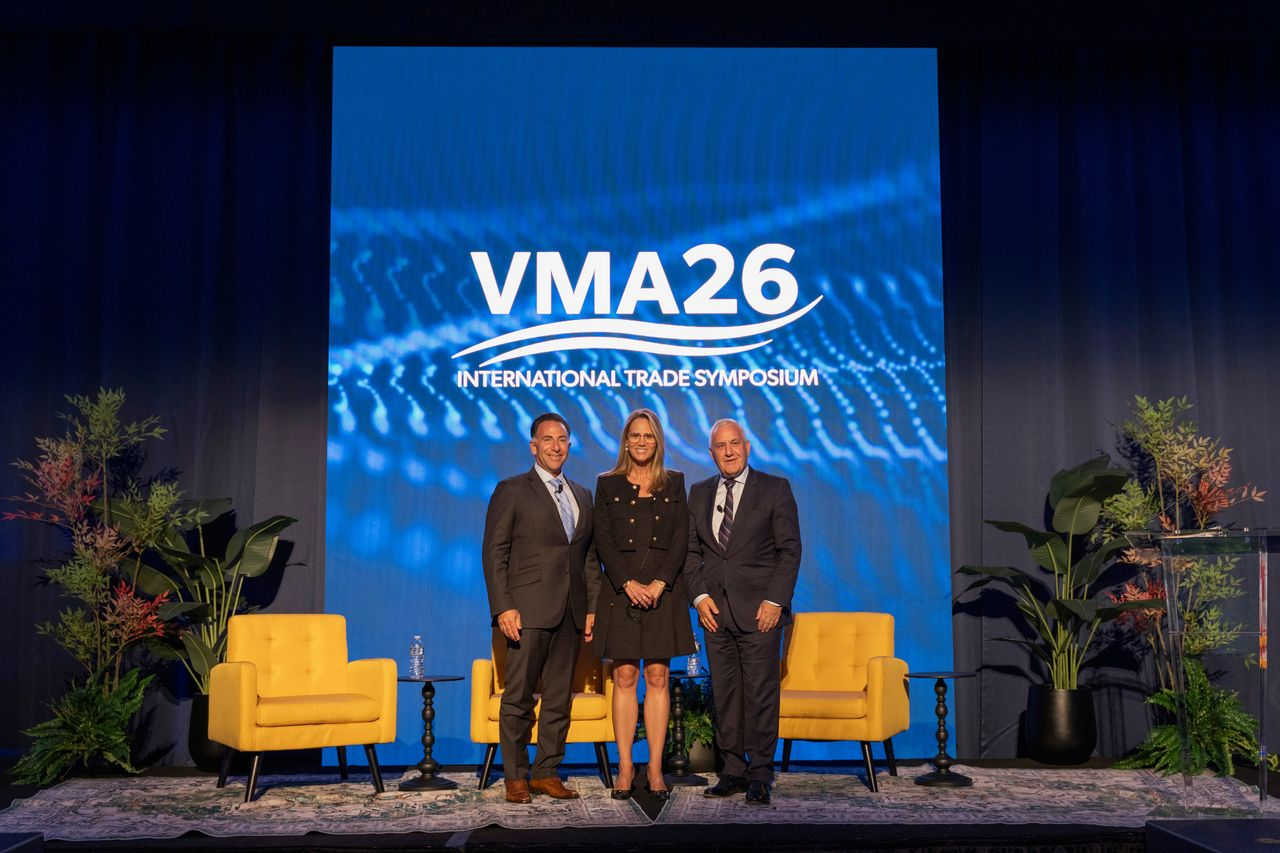
Norfolk Southern and Union Pacific CEOs told industry leaders at VMA26 that their proposed merger will deliver new transportation options, improve freight efficiency and better connect East Coast businesses to markets across the country through the nation’s first transcontinental railroad.
During a featured fireside chat at the Virginia Maritime Association International Trade Symposium, moderated by veteran supply chain journalist Lori Ann LaRocco, Mark George, president and CEO of Norfolk Southern, and Jim Vena, CEO of Union Pacific, described how a unified coast-to-coast network will reduce supply chain friction, create new competitive transportation options and strengthen connections between ports, inland markets and major freight corridors nationwide.
Building on Virginia’s Rail Advantage
The discussion centered on Virginia’s unique role in the nation’s freight network and the longstanding partnership between Norfolk Southern and the Port of Virginia.
George emphasized, “East Coast ports are extraordinarily efficient,” noting, specifically, the speed of throughput at the Port of Virginia and team behind it. Today, the Port of Virginia is Norfolk Southern’s largest container port partner. The proposed combination will build upon that foundation by connecting Virginia directly with Union Pacific’s expansive western network.
“We’re going to work hard with [the Port of Virginia] to figure out how we win and be able to move some of that East Coast business that’s going to the Canadian ports and bring it to the East Coast ports,” said Vena.
The leaders emphasized that existing customer relationships, port partnerships and service commitments will remain the foundation of the business while creating new opportunities for growth.
Removing Friction from the Supply Chain
A recurring theme throughout the discussion was the importance of simplifying freight movement.
Today, thousands of shipments moving between the eastern and western United States require interchange between railroads, creating additional handling, delays and complexity. The proposed combination will convert approximately 10,000 existing lanes from interline to single-line service, giving customers one railroad accountable from origin to destination. The combined network will eliminate thousands of daily freight handlings and remove many of the delays associated with railroad-to-railroad transfers. Vena summed up the customer benefit: “Any customer that wants to move on a seamless railroad is going to be able to have faster service.” He added that faster service will also reduce customers’ asset and inventory costs.
George underscored what those handoffs mean for customers: “We create invisibility for our customers because you’re handing off from one company to another. They don’t know where the freight is.” A single-line network, he said, removes that disruption while improving speed, asset efficiency and resilience.
George and Vena noted that reducing friction throughout the supply chain ultimately will help rail compete more effectively against long-haul trucking while creating a simpler experience for customers.
New Markets, New Opportunities
The CEOs also discussed how a single transcontinental network will create entirely new transportation opportunities for manufacturers, retailers, agricultural producers and logistics providers.
The combined railroad will connect approximately 50,000 route miles across 43 states and more than 100 ports while opening tens of thousands of new single-line shipping opportunities. The railroad projects that approximately 2.1 million truckloads will ultimately shift from highway to rail each year as service becomes more competitive. Not to mention, seven new premium intermodal lanes.
For Virginia and other states, that means stronger connections between ports, inland markets, manufacturing centers and western destinations.
“It’s closer to get to the middle of the country from the East Coast ports than it is from the West Coast ports,” Vena said. “I see growth here. The opportunity on the East Coast should not be second-guessed.”
Growth Backed by Investment
The conversation also focused on execution.
The leaders detailed plans to invest an estimated $2 billion in incremental capital to integrate the two companies and deliver benefits to customers, including infrastructure improvements, terminal enhancements, technology investments and service-supporting capital projects designed to help ensure a seamless experience.
They discussed the combination’s extensive service assurance commitments, customer oversight mechanisms and integration planning efforts, all designed to protect service throughout implementation.
George emphasized that the integration will be deliberate. “A lot of the mistakes in the past have been people trying to rush these integrations, and we have no reason to rush,” he said. “We’re going to take our time.”
“You need to work hard. You need to be committed. You need to spend capital, which we’re willing to do, and you need to be able to do it right,” Vena said.
A More Competitive Future
Closing the discussion, both leaders emphasized that the combination is ultimately about making rail more competitive, creating new opportunities for customers and strengthening America’s supply chain.
For Virginia’s exporters, importers, manufacturers, ports and logistics providers, they said the opportunity is straightforward: build on an already successful rail-port partnership and connect it to a seamless transcontinental network capable of serving more markets with greater efficiency and reliability.
Please review Union Pacific’s cautionary note regarding forward-looking statements.