Building A Stronger, More Competitive Network
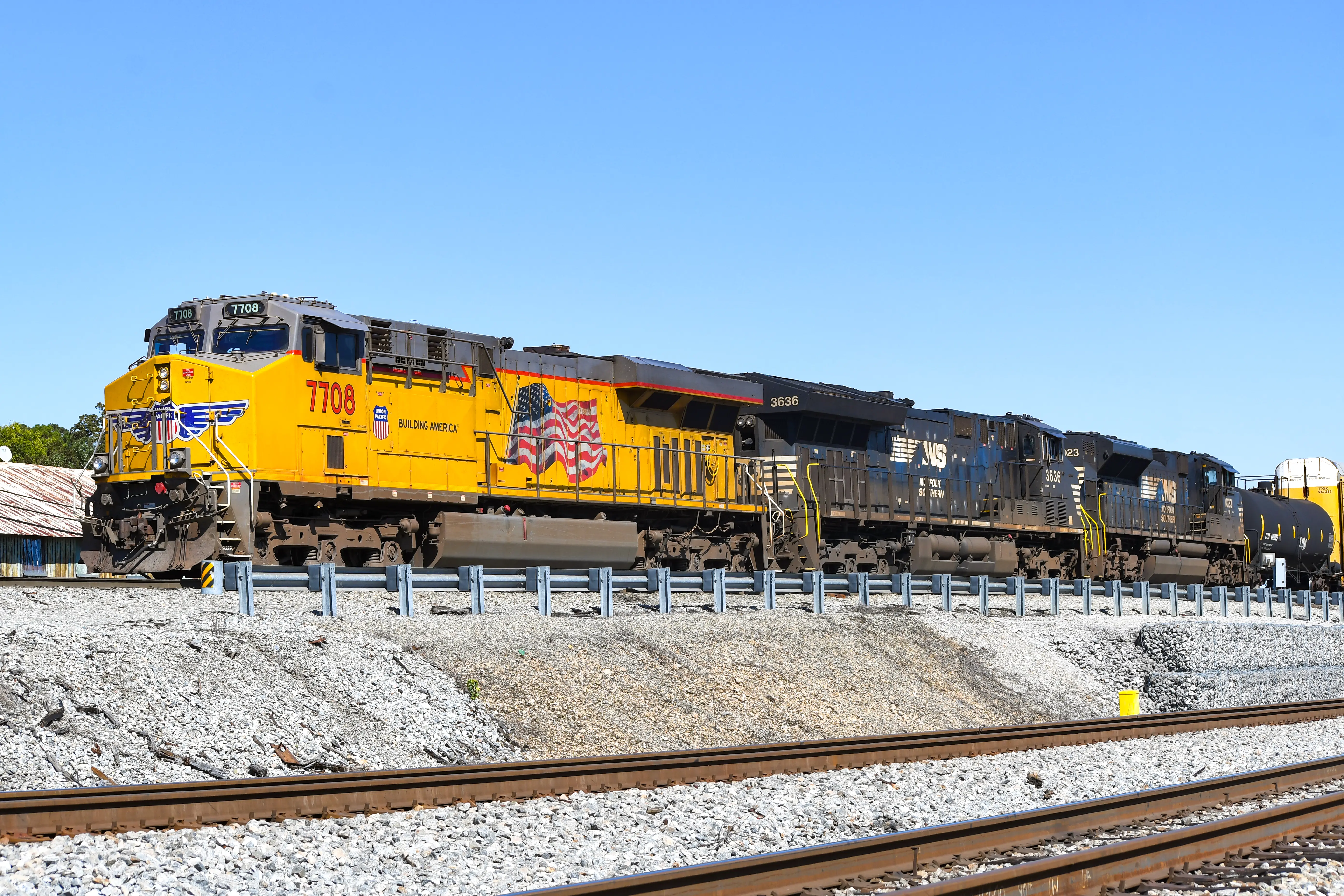
American competitiveness depends on a world-class supply chain. But today, cross-country rail shipments still face a built-in obstacle: the handoff between eastern and western carriers, where delays, added costs and uncertainty are routine.

Union Pacific and Norfolk Southern are creating a straightforward fix. By combining into a single transcontinental system, that longstanding break in the network will be replaced by seamless, single-line service. This will lead to lower total transportation costs, faster transit times and more consistent, dependable service.
The Union Pacific - Norfolk Southern market share refers to how the combination could affect competition across U.S. freight rail markets. The transaction links complementary networks and is structured as an end-to-end connection rather than overlapping consolidation. As part of its review, the Surface Transportation Board (STB) evaluates market share impacts corridor by corridor, including effects on competition, routing options and shipper choice. Combined, it would be the same size as BNSF is today, and only 11% of freight transportation.

Raising the Bar for Railroads

The merger raises the bar for the railroad industry and its competitiveness. A faster, more consistent end-to-end network forces every carrier to compete harder on service, reliability and cost - the very definition of enhanced competition. If we don’t move forward, the rail industry will be left behind 

Real Competition Across the Supply Chain

The merger strengthens competition across the entire U.S. supply chain. A single-line, coast-to-coast option allows rail to better compete with long-haul trucking, giving shippers a new choice and putting real pressure on prices and service levels across modes.

Stronger Supply Chain, Stronger Economy

The result is a more competitive American supply chain. When freight moves faster, more reliably and at lower cost, businesses can invest, grow and compete more effectively – strengthening U.S. competitiveness in a global economy where logistics performance is a decisive advantage.

A Breakthrough for the Mississippi Watershed Region
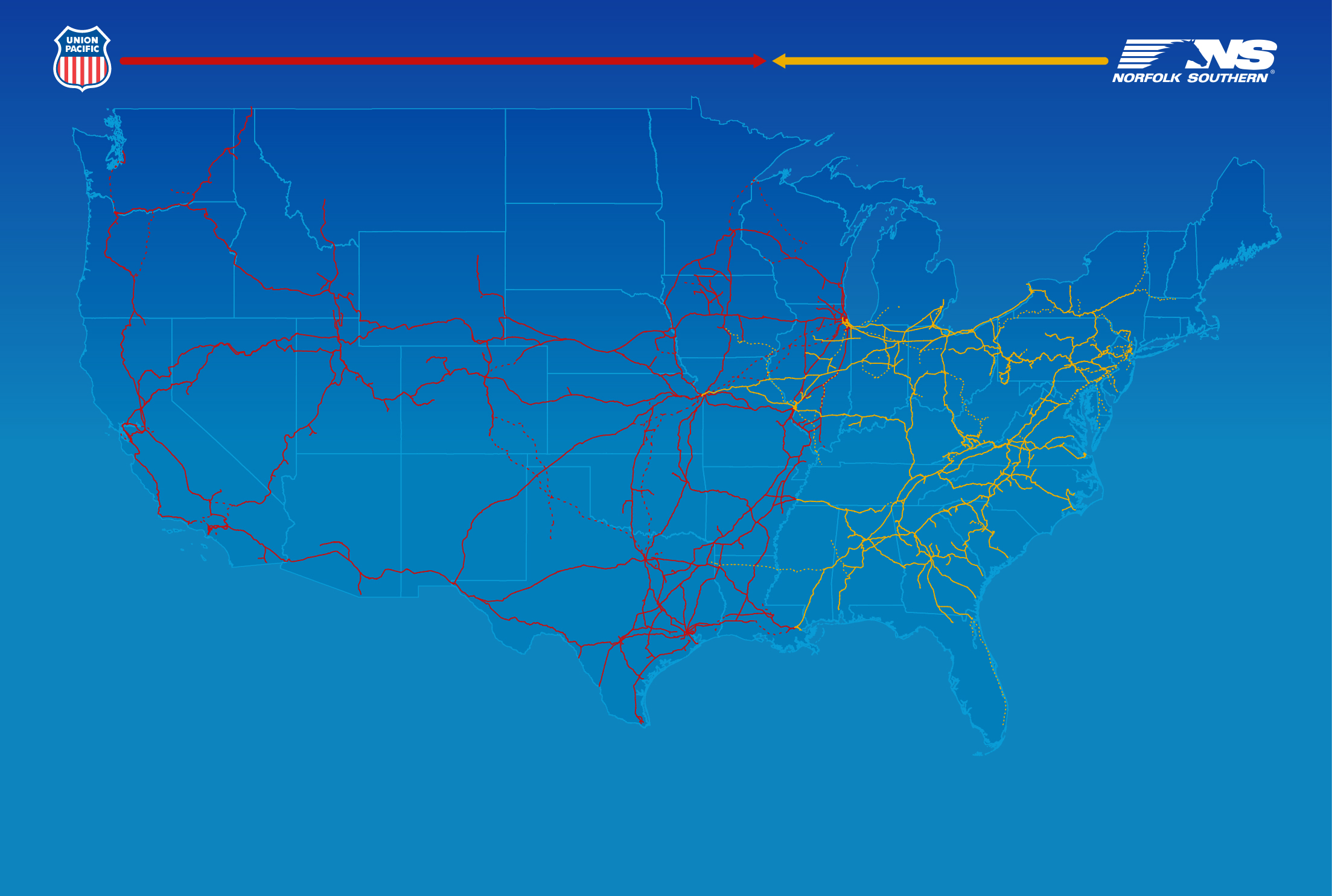
For shippers in the Mississippi watershed region, the impact is especially meaningful. Today, many of these customers sit at the dividing line between eastern and western railroad carriers, where freight is delayed, costs increase and service becomes less predictable. A seamless network will remove that barrier, giving domestic shippers direct options and more competitive access to markets in every direction.

End-to-End, No Overlap

This is a classic end-to-end combination, not a consolidation of overlapping routes. The combined network will preserve existing rail competition while unlocking 88,000 new county-to-county lanes for seamless single-line service – expanding options for shippers rather than reducing them. 

Open Gateways, Broader Competition

All existing gateways will remain open and consistent with the competition preserving conditions applied in recent mergers. This ensures other railroads can continue to compete for traffic and that customers retain access to multiple routing options. 

Positioning Shippers to Benefit from New Options

Potential opportunities include West Coast–Midwest–Southeast freight corridors that currently require multiple interchanges, particularly for intermodal and certain carload traffic. Specific service enhancements, routes and any competitive conditions are defined through the STB review and authorization process.
[LINK: Intermodal & Ports]

A Breakthrough for the Mississippi Watershed Region

For shippers in the Mississippi watershed region, the impact is especially meaningful. Today, many of these customers sit at the dividing line between eastern and western railroad carriers, where freight is delayed, costs increase and service becomes less predictable. A seamless network will remove that barrier, giving domestic shippers direct options and more competitive access to markets in every direction.

“My primary opinion is that the combined vertical effects of the proposed merger of UP and NS are procompetitive, meaning that they will enhance competition in the rail industry, create downward pressure on price relative to the state of the world that would exist absent the merger, and benefit shippers in the form of greater investment, higher quality service, and a more efficient rail network.”

— Dr. Mark Israel,

Founding Partner, Econic Partners, Statement to the STB

Frequently Asked Questions

No items found.

FAQs About Union Pacific-Norfolk Southern Market Share

Does combining these railroads reduce the options for shippers?

No. This is an end-to-end combination with minimal route overlap, so it doesn’t eliminate head-to-head competition. Instead, it will create new single-line service options that don’t exist today, expanding choices for shippers that reduce costs while preserving existing competitive routes.

Won’t a larger railroad have more power to raise rates?

By making rail more competitive with long-haul trucking, the merger will introduce stronger supply chain competition that puts downward pressure on pricing. At the same time, open gateways and enforceable interchange terms maintains all rail carriers ability to compete.

How can you claim this enhances competition?

This transaction connects two strong, complementary networks rather than consolidating overlapping ones, and it’s supported by modern operating technology and detailed integration planning. The result will be better service and more options.

Will other railroads be shut out of key interchange points?

No. All existing gateways will remain open on commercially reasonable terms, consistent with the competition-preserving framework applied in recent mergers. In addition, Committed Gateway Pricing provides transparent rates that preserve access and enable continued competition.

What about shippers located in limited-access markets; will they lose leverage?

Many of those shippers gain new options. By eliminating the need for handoffs between rail carriers, the merger will create new single-line routes, opening tens of thousands of new shipping options. That expanded reach will give more customers practical alternatives and improve their competitive position.

Make Your Voice Heard

More than 2,000 businesses, unions, farmers and community leaders have already told the Surface
Transportation Board why this combination matters — the largest show of support in STB history.
Tell your representatives in Congress why America needs a transcontinental railroad.

News & Updates
STB Filing Hub

Your voice is part of the record.