Vena Sees Union Pacific’s Intermodal Growth Strategy in Action in the Inland Empire
● Union Pacific is building the network foundation for future growth. More than $1.2 billion invested in intermodal facilities over the past five years is expanding capacity across the system and positioning the railroad to capture additional opportunities from the Union Pacific-Norfolk Southern combination.
● Infrastructure, technology and employees are working together to deliver stronger service. Union Pacific is pairing terminal investments with tools like Precision Gate Technology and UPGo, while employees are finding practical ways to improve operations, reuse assets and create value.
● West Colton is creating capacity for Union Pacific’s intermodal growth. Modernization of the yard and expansion of the Inland Empire Intermodal Terminal are improving network fluidity, supporting more efficient freight movement and preparing Southern California operations for continued demand.
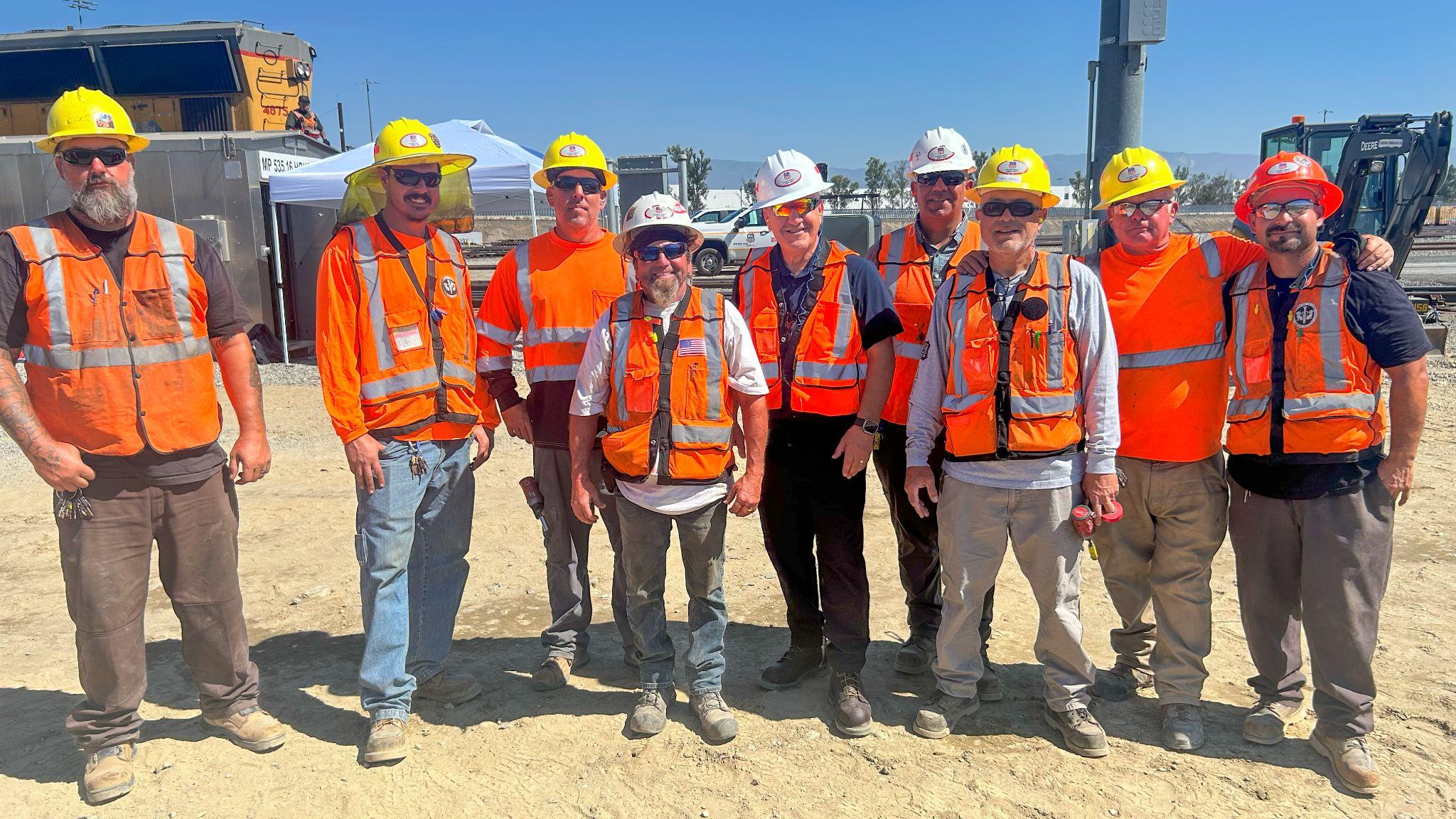
On a recent visit to Union Pacific’s West Colton Yard in Bloomington, California, CEO Jim Vena saw firsthand how employees are transforming one of the railroad’s most important Southern California facilities and creating capacity to support future intermodal demand.
As Vena toured the yard, he reviewed progress on the modernization project, scheduled for completion in early 2027. The effort expands the Inland Empire Intermodal Terminal (IEIT), reconfigures portions of West Colton Yard for intermodal use and creates additional capacity at nearby Montclair Yard to support manifest operations, improving network fluidity and supporting continued growth across Southern California.
“What impressed me most was the pride these employees take in their work,” Vena said. “The investments we’re making in the Inland Empire and across our intermodal network are creating new opportunities for growth, and it’s our people who are making those investments successful every day.”
Employees Driving Progress
Vena spent time with about 30 Track and Signal Construction employees working in the yard, where crews were installing a switch and completing signal work to support ongoing modernization efforts.
Employees welcomed the opportunity to speak directly with Vena, who answered questions and thanked them for their work.
“Employees were excited to have Jim on site,” said Manny Arambulo, general director, Engineering. “He made it clear that the work being done here matters.”
Throughout construction, crews have identified opportunities to repurpose existing yard materials, including switches, track panels and other railroad components, rather than purchasing new materials when existing assets could be safely reused.
“Some of our best ideas have come from the employees working on the project every day,” Arambulo said. “They take pride in their work and are always looking for ways to create value and spend money wisely.”
Building Capacity for Intermodal Growth
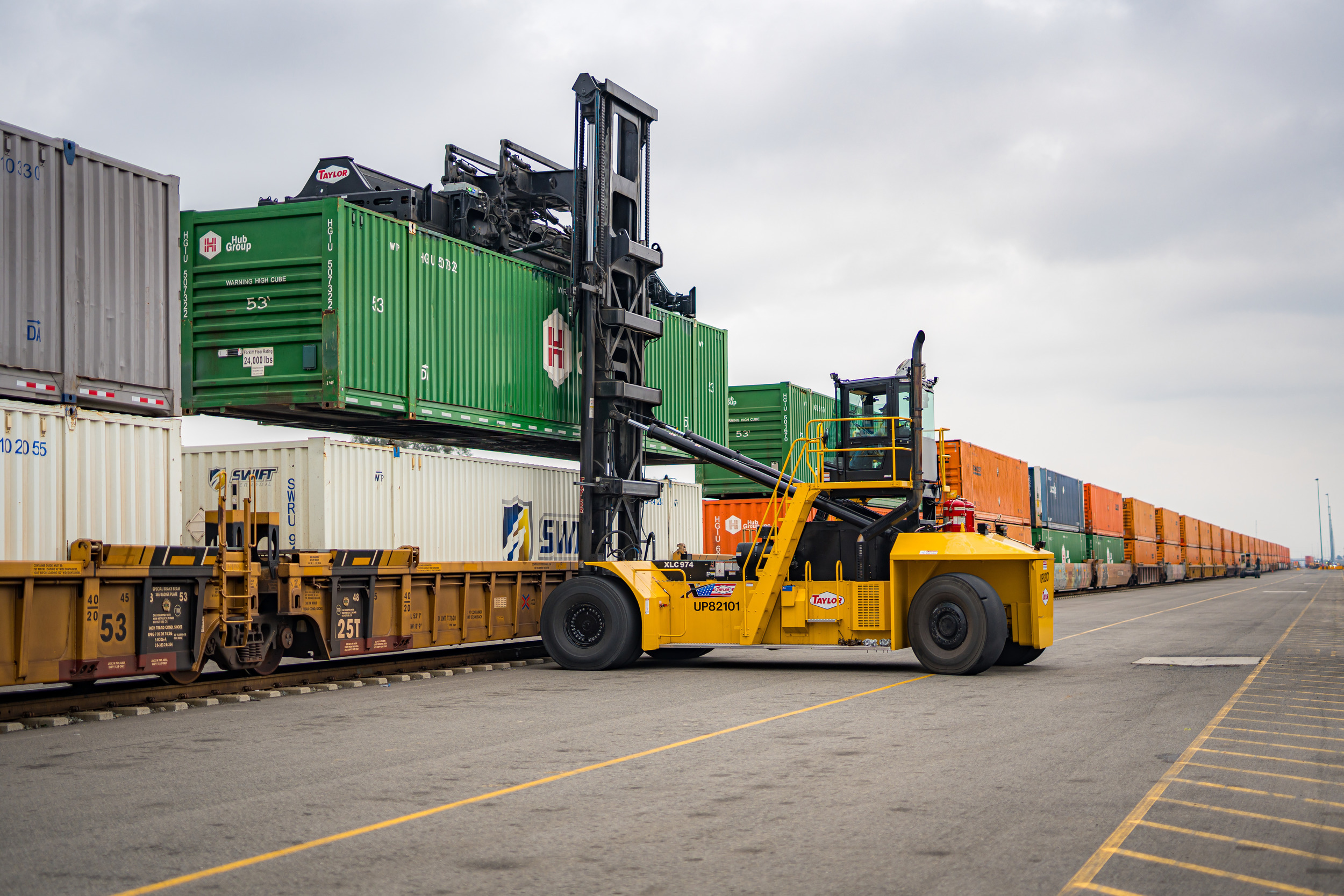
The West Colton modernization project is part of Union Pacific’s broader intermodal growth strategy.
Over the past five years, Union Pacific has invested $1.2 billion to expand and enhance its intermodal footprint across the network, including the expansion or opening of terminals in the Inland Empire, Phoenix, Kansas City, Twin Cities and Lathrop, California.
Union Pacific launched IEIT in 2021 to capitalize on Southern California’s growing warehouse and distribution market. Since then, the terminal has expanded through six phases of development, including converting former yard infrastructure into intermodal capacity. The expansion enables customers to move freight more efficiently and creates new opportunities to convert over-the-road freight to rail.
Together, these improvements position Union Pacific to meet customer demand today while preparing for future growth opportunities, including the additional network connections and market access expected from the proposed combination with Norfolk Southern.
Investments Delivering Results
Beyond Southern California, Union Pacific has invested in advanced technology to improve efficiency and support growth across its intermodal network, as well as enhance the customer and driver experience. Precision Gate Technology and the UPGo mobile app help truck drivers move through terminals more efficiently while providing greater shipment visibility.
The railroad also continues investing in reliability and security initiatives, including expanded use of drones, camera surveillance, specialized fencing and trespass detection systems.
The strategy is delivering measurable results. Union Pacific’s service is highly competitive with trucking, moving freight more than 500 miles per day. This strong performance reflects continued improvements in network fluidity and overall service execution.
Those gains reflect a strategy built on infrastructure, technology and employee innovation, the same combination that Vena saw firsthand at West Colton as Union Pacific positions its network for continued intermodal growth.