What Conrail Has Taught Us About Growth
Key Takeaways:
- Conrail proved that network integration can unlock growth opportunities that partnerships alone cannot. Once the networks were combined, Norfolk Southern was able to launch new services, open new markets and grow intermodal traffic by more than 1 million revenue moves within five years.
- Long-term growth depended on sustained investment in infrastructure and service. Expanded terminals, upgraded equipment and major corridor projects such as the Heartland, Crescent, Patriot and Meridian initiatives helped Norfolk Southern add more than 2 million intermodal loads and become one of North America’s leading intermodal carriers.
- The Conrail experience provides a roadmap for a Union Pacific-Norfolk Southern combination. By creating new single-line routes, investing in key corridors and terminals, and improving network efficiency, the proposed transcontinental railroad is designed to expand customer options, strengthen rail’s competitiveness and attract freight from highways to rail.
Making the Route Work
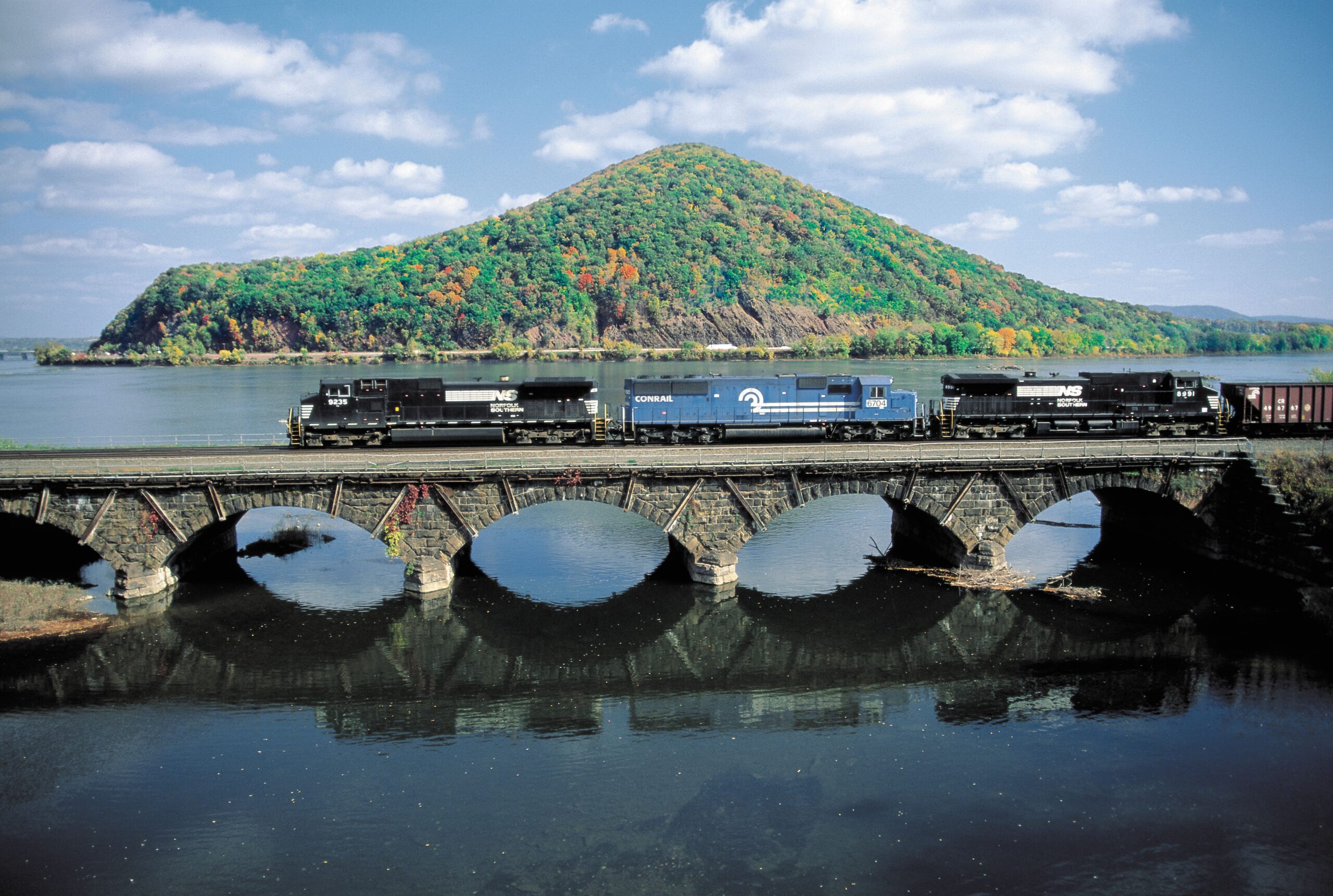
Without the Conrail transaction, these new services and this growth would not have been possible. Take, for example, the market between the Southeast and the Northeast, a lane such as Atlanta to Jersey City. This 800+ mile highway corridor has always been rich with freight, but Norfolk Southern and Conrail could never unlock its intermodal potential. The reason was clear: While Norfolk Southern would enjoy a lucrative 700-mile length-of-haul, Conrail would be saddled with a haul of barely 250 miles. Why would Conrail direct its assets to this short-haul lane in lieu of the rich markets of Chicago, St. Louis and Kansas City?
Norfolk Southern and Conrail tried very hard to solve this problem with multiple ventures, including conventional intermodal services, a joint double-stack project, and a joint venture involving Norfolk Southern’s Triple Crown trucking subsidiary. None worked economically for either party, particularly Conrail. However, as soon as the Conrail and Norfolk Southern networks were integrated, the route between the Southeast and the Northeast became one of Norfolk Southern’s most important franchise corridors and now supports five to six dedicated intermodal trains per day.
Investing for Growth
In the years that followed, we launched several corridor programs to layer further capacity and efficiency on top of our already solid network. As the investments in the Heartland Corridor, the Meridian Speedway, the Patriot Corridor and the Crescent Corridor came online, Norfolk Southern added another 1 million intermodal loads to its network. Between 2001 and 2018, Norfolk Southern logged the highest percentage growth in intermodal volume in the industry, and by 2016, rose to be the second-largest handler of intermodal volume in North America and still holds that position today. Between 2000 and 2018, annual intermodal volume grew by 2.2 million loads. Between 2000 and 2025, Norfolk Southern has had the highest intermodal growth rate in the industry — by far — and absolute unit growth levels rivaling the larger intermodal book of BNSF.
Carrying the Lessons Forward
If this strategy of investment, launching new and improved services, and taking trucks off the highway sounds familiar, it is because this is precisely what we intend to do through the proposed Union Pacific-Norfolk Southern combination. Our application details investments in routes and terminals that are designed to take advantage of the collective strengths of our respective networks.
For example, creating America’s first transcontinental railroad will afford us the opportunity to increase utilization of Norfolk Southern’s line between Kansas City and Ohio, a route that will see $127 million of investment to create the shortest rail route between Southern California and Norfolk Southern’s extensive Midwest and Northeast portfolio of terminals and customers. The same scenario plays out over New Orleans, where new shorter routings between the Gulf and the Northeast will be implemented, and new services from Texas and Mexico to the Northeast and Southeast will be launched over the shortest route between these markets. All of these are key growth markets for our nation’s economy.
Bringing the Norfolk Southern and Conrail networks together created opportunities that could not have been realized through alliances alone. Sustained investment and improved service helped turn those opportunities into growth. We’ve studied, and we’ve planned against past failures. The lessons learned from that transaction, and many others, are at the heart of how we are approaching the proposed Union Pacific-Norfolk Southern combination, and Conrail, in many ways, is emblematic of the growth we can unlock together.
Please review Union Pacific’s cautionary note regarding forward-looking statements.