A More Reliable Rail Network, Coast to Coast

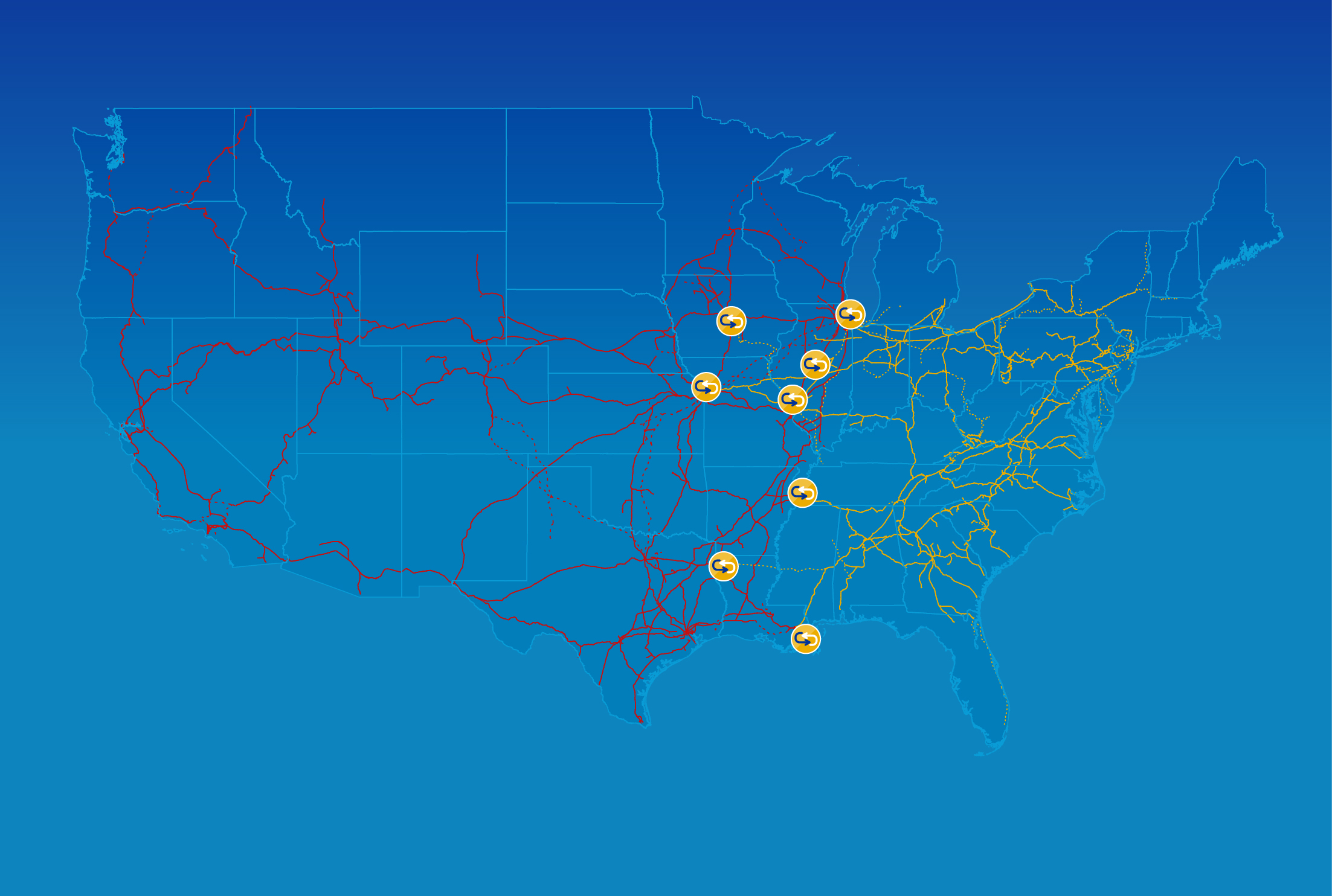
Rail service reliability refers to the consistency and predictability of freight movement across rail networks. It is influenced by factors such as routing structure, scheduling and coordination between carriers. The Union Pacific–Norfolk Southern combination is designed to reduce delays, expand single-line service and improve transit consistency across key freight corridors.

Seamless Service, More Reliable Performance

Moving freight on a single, continuous network improves consistency from origin to destination. By eliminating interline handoffs, the merger will remove thousands of transfer points and reduces an estimated 2,400 rail car and container handlings each day, cutting delays and variability.

Built for Resilience

A larger, more connected network can respond more effectively to weather events, congestion or regional disruptions. With more routing options and systemwide flexibility, the combined network will keep freight moving when conditions change.

One Partner, Fully Accountable

Customers will have one railroad responsible from origin to destination. That means faster problem-solving, clearer communication and one customer service point of contact to call if any issues arise.

Designed to Avoid Disruption

Because this is an end-to-end combination, most traffic will continue moving as it does today, and most yards and terminals will see little to no increase in activity. The primary changes will streamline existing interchange traffic, reduce complexity and lower the risk of service disruptions.

Driving Seamless Integration Through $2 Billion Investment

Union Pacific and Norfolk Southern anticipate investing an estimated $2.1 billion of incremental capital to ensure a smooth, well-executed integration – supporting technology, training and operations and a carefully phased integration.

Service You Can Count On

The merger’s Service Assurance Plan adds an extra layer of protection for customers. If service falls short and issues aren’t resolved, a formal arbitration governed by [INSERT] process ensures concerns are addressed quickly and fairly.

Stronger Asset Utilization

Locomotives, crews and rail cars can be deployed even more efficiently across a single network. That improves fluidity, reduces bottlenecks and ensures resources are where they’re needed most.

"This is a significant breakthrough in U.S. freight transportation. By knitting together a coast-to-coast rail option, this merger has the potential to compete more effectively with trucking while offering shippers a more seamless and reliable option for transcontinental freight."

— Adam Miller

CEO, Knight-Swift Transportation

Common Claims About Service, Disruption and Competition

Opponents often claim a combination will disrupt service during integration or reduce competitive options for shippers. These are reasonable questions that require clear, record-based answers. The application addresses transition planning and service continuity.

FAQ

Rail mergers have a history of service issues during their integration periods. Why should this one be any different?

This is an end-to-end combination, not a merger of overlapping systems, so most traffic will
continue to move as it does today. The changes focus on streamlining existing interchange
traffic, eliminating an estimated 2,400 daily rail car and container handlings and reducing the
complexity that can cause disruptions.

Even with a good plan, what happens if service breaks down after the merger?

The integration is backed by an estimated $2.1 billion of incremental capital to support
operations, technology and training. In addition, a Service Assurance Plan designed as part of
the STB application reinforced by a formal arbitration process ensures customers have a clear,
enforceable path to resolve any merger-related service issues.

Why should customers trust that service will improve?

The merger is designed to remove the biggest sources of inconsistency in today’s network –
handoffs and fragmented accountability. A simpler, single-line system with one accountable
carrier delivers more predictable performance.

Frequently Asked Questions

No items found.

Make Your Voice Heard

More than 2,000 businesses, unions, farmers and community leaders have already told the Surface Transportation Board why this combination matters — the largest show of support in STB history. Tell your representatives in Congress why America needs a transcontinental railroad.

News & Updates
STB Filing Hub

Your voice is part of the record.