A More Connected Rail Network Can Strengthen America’s Agricultural Economy
Author: Union Pacific | May 11, 2026
Key Takeaways:
- Single-line rail service can reduce friction for agricultural shippers. The Union Pacific-Norfolk Southern combination will connect eastern and western rail networks into one seamless coast-to-coast freight option designed to reduce interchange delays and improve long-distance freight movement.
- More efficient freight movement supports American competitiveness. Faster, more direct rail service can help agricultural producers move grain and other commodities to ports and markets with greater flexibility and reliability.
- The combination is framed as a public-interest infrastructure investment. Supporters argue that a more connected freight rail network will strengthen supply chains, support export competitiveness and create a stronger long-distance transportation option for U.S. industry.
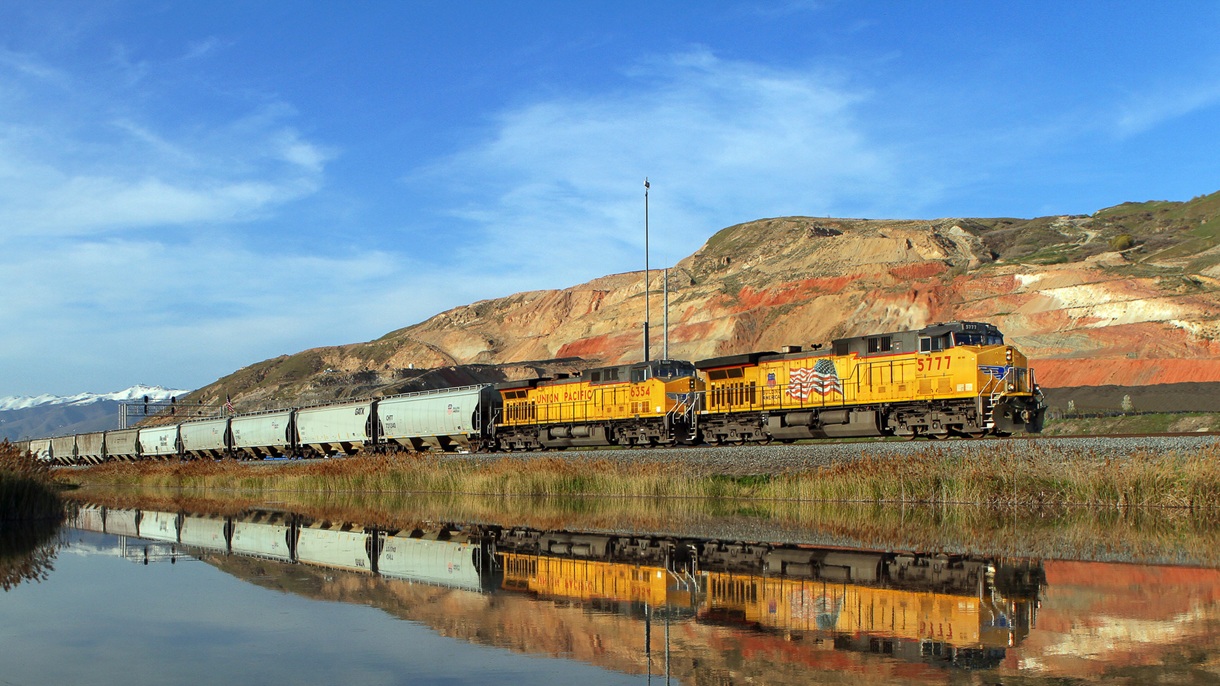
An Agri-Pulse opinion piece examines the Union Pacific and Norfolk Southern combination through the lens of American agriculture and freight efficiency.
Today’s freight rail system still operates through fragmented regional networks that often require freight to transfer between carriers before reaching its destination. For agricultural customers moving grain, soybeans and other commodities across the country, those handoffs can add time, complexity and cost throughout the shipping process.
If approved by the Surface Transportation Board, the Union Pacific and Norfolk Southern combination will create America’s first single-line transcontinental freight railroad, connecting complementary eastern and western rail networks into a more unified coast-to-coast freight system. For customers, that will mean more direct routing, fewer interchanges, unified shipment visibility and a more seamless long-distance service experience.
Rail remains critical to moving commodities to export markets and processing hubs, particularly in the Midwest. More efficient rail access can help producers reach Gulf Coast, East Coast and Pacific Northwest ports with greater flexibility while reducing dependence on interchange-heavy routes. Rail competes every day with trucking and other freight modes for long-distance freight movement. A more integrated transcontinental rail option will strengthen rail’s position within the broader transportation market while helping move more freight on existing privately funded rail infrastructure, creating a more competitive network.
Broader efficiency also extends beyond agriculture. More connected freight can support domestic manufacturing, improve supply chain coordination and help businesses move goods more reliably across major industrial corridors. The combination is also positioned as a long-term investment in national freight capacity, with supporters arguing that stronger rail connectivity will help American exporters compete more effectively in global markets.
Historical freight rail integration and modernization efforts have generally been associated with operational efficiencies, stronger network coordination and more competitive shipping outcomes for customers.
The Union Pacific and Norfolk Southern combination is a structural modernization effort focused on creating a stronger coast-to-coast freight option for American industry, agriculture and supply chains.
Today’s freight rail system still operates through fragmented regional networks that often require freight to transfer between carriers before reaching its destination. For agricultural customers moving grain, soybeans and other commodities across the country, those handoffs can add time, complexity and cost throughout the shipping process.
If approved by the Surface Transportation Board, the Union Pacific and Norfolk Southern combination will create America’s first single-line transcontinental freight railroad, connecting complementary eastern and western rail networks into a more unified coast-to-coast freight system. For customers, that will mean more direct routing, fewer interchanges, unified shipment visibility and a more seamless long-distance service experience.
Rail remains critical to moving commodities to export markets and processing hubs, particularly in the Midwest. More efficient rail access can help producers reach Gulf Coast, East Coast and Pacific Northwest ports with greater flexibility while reducing dependence on interchange-heavy routes. Rail competes every day with trucking and other freight modes for long-distance freight movement. A more integrated transcontinental rail option will strengthen rail’s position within the broader transportation market while helping move more freight on existing privately funded rail infrastructure, creating a more competitive network.
Broader efficiency also extends beyond agriculture. More connected freight can support domestic manufacturing, improve supply chain coordination and help businesses move goods more reliably across major industrial corridors. The combination is also positioned as a long-term investment in national freight capacity, with supporters arguing that stronger rail connectivity will help American exporters compete more effectively in global markets.
Historical freight rail integration and modernization efforts have generally been associated with operational efficiencies, stronger network coordination and more competitive shipping outcomes for customers.
The Union Pacific and Norfolk Southern combination is a structural modernization effort focused on creating a stronger coast-to-coast freight option for American industry, agriculture and supply chains.