One Network. Nationwide Reach. Global Advantage.
One Network. Nationwide Reach. Global Advantage.
The world’s most powerful economy is built on end-to-end infrastructure.
But one gap remains.
America’s rail system has been divided into East and West for more than a century. Freight moving across the country still depends on handoffs between multiple railroads.
But one gap remains.
America’s rail system has been divided into East and West for more than a century. Freight moving across the country still depends on handoffs between multiple railroads.
This is the moment to change that. Manufacturing is coming back to the U.S., and companies are adjusting to meet growing demand. A unified rail network will support American reindustrialization and keep freight moving through U.S. ports, supporting job and economic growth.
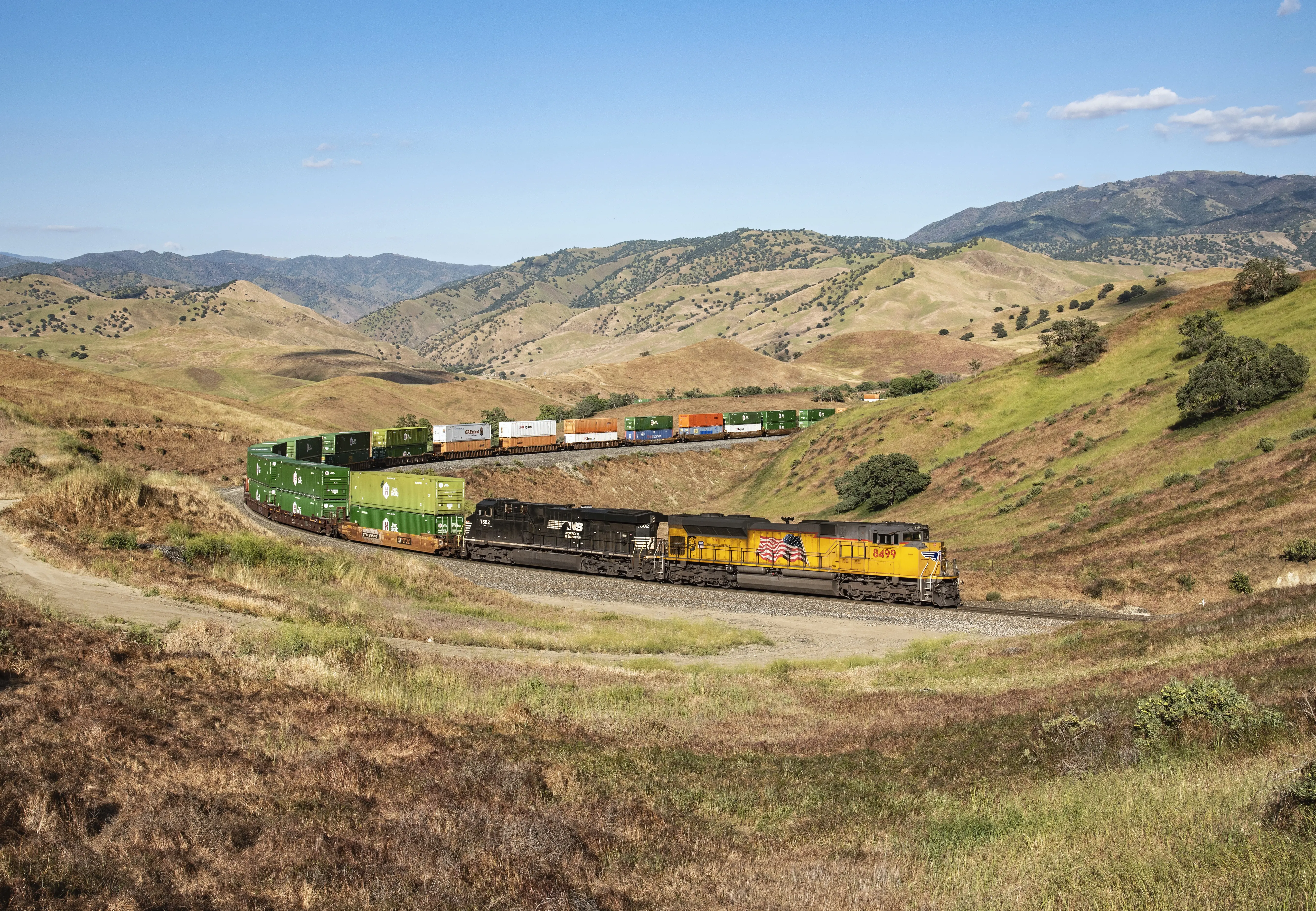
America’s first transcontinental railroad will, for the first time, connect the country end to end under a single operating system.
That will be a foundational upgrade to U.S. supply chain infrastructure. The Union Pacific–Norfolk Southern combination will strengthen our nation’s competitiveness and improve supply chain resilience across industries. A unified network will enable freight to move coast to coast with consistent timing, improving America’s position in global trade while lowering costs.
That will be a foundational upgrade to U.S. supply chain infrastructure. The Union Pacific–Norfolk Southern combination will strengthen our nation’s competitiveness and improve supply chain resilience across industries. A unified network will enable freight to move coast to coast with consistent timing, improving America’s position in global trade while lowering costs.
Stronger American Competitiveness
U.S. businesses depend on supply chains that move quickly, consistently and at competitive cost. A fully connected rail system will improve how goods and materials move across the country, helping companies operate more efficiently and compete more effectively both at home and abroad.
Reduced Highway Congestion and Safer Roads
Moving more long-distance freight onto rail takes pressure off already congested highway corridors. That means fewer trucks in traffic, less strain on taxpayer-funded public infrastructure and safer driving conditions across the country.
Reduced Emissions and Fast Growth
Rail offers the safest, most energy-efficient and environmentally responsible way to move freight over land. Increasing its role in the supply chain lowers overall emissions and supports economic growth with a smaller environmental footprint.
Expanded Access for the Mississippi Watershed Region
Businesses along the Mississippi Watershed, the artificial East–West divide have faced slower service and fewer routing options for years, with freight best suited for rail instead moving by truck. For the first time, shippers in this region will have access to single-line service by rail, opening access and providing choice.
Stronger Links to Global Markets
As U.S. manufacturing expands and global competition continues to increase, reliable connections to ports and international gateways become more important. A coast-to-coast rail system will strengthen those connections and improve how American goods reach global customers.
New Service Opportunities
The combined network will create an additional 88,000 county-to-county lanes where shippers are moving freight by road that could–for the first time–move by single-line rail service, connecting customers and communities in ways that were not previously possible. This expanded reach creates new pathways for growth across regions and industries and reduces shipper costs as they can cycle equipment faster.
Gains Across Key Industries
More consistent rail performance benefits sectors that depend on reliable freight movement. Agriculture, energy, manufacturing and retail will all see improvements in timing, cost and service predictability.
Critical Support for National Defense
Rail is essential to moving military equipment and supplies across the country. A more integrated system will improve speed and coordination when it matters most, supporting readiness and rapid deployment.

Long-term Investment in U.S. Infrastructure
Today, Union Pacific and Norfolk Southern invest approximately $5.6 billion annually in infrastructure, innovation and network expansion.
Continued Support for Passenger Service
Our commitment to passenger rail isn’t changing. A more coordinated network will help maintain important passenger routes and create more reliable service for the millions of people who rely on passenger rail each year, while unlocking new opportunities for freight and passenger rail partnerships.
“By creating a seamless rail network spanning 10 international interchanges and approximately 100 ports, this combination would fundamentally reshape how American manufacturers and exporters compete on the world stage.”
— Steve Stivers
President and CEO, Ohio Chamber of Commerce
Addressing Questions About National Impact
Some stakeholders ask whether this is primarily a rail industry transaction. It is not. This is about moving the rail industry forward to better compete.
Others ask whether the benefits extend beyond large industrial centers. They do. Expanded access to single-line service will create new opportunities for smaller communities and regional economies.
Finally, there are questions about oversight. The Surface Transportation Board (STB) will evaluate the full national impact, including competition, service and public interest considerations, while the Federal Railroad Administration (FRA) will continue to provide critical safety oversight.
Read more on competition.
Others ask whether the benefits extend beyond large industrial centers. They do. Expanded access to single-line service will create new opportunities for smaller communities and regional economies.
Finally, there are questions about oversight. The Surface Transportation Board (STB) will evaluate the full national impact, including competition, service and public interest considerations, while the Federal Railroad Administration (FRA) will continue to provide critical safety oversight.
Read more on competition.
FAQ About US supply chain infrastructure and national impact
Why is a transcontinental rail network important now?
The rail industry is at risk of being left behind; global competition and supply chain pressure require faster, more reliable infrastructure. A unified network will strengthen the country’s ability to move freight efficiently.
How does this affect cost for shippers?
It will lower costs due to faster cycle times.
What is the national security benefit?
Improved rail logistics will support faster and more reliable movement of military equipment and supplies.
How does this impact local communities?
Expanded rail access will create new economic opportunities and improves connectivity to national markets.
Who oversees this process?
The Surface Transportation Board (STB) will conduct a full review of competition, service and public interest impacts.
Make Your Voice Heard
Explore More
