Event Recap: The Future of Freight Rail in America
Author: Union Pacific | April 17, 2026
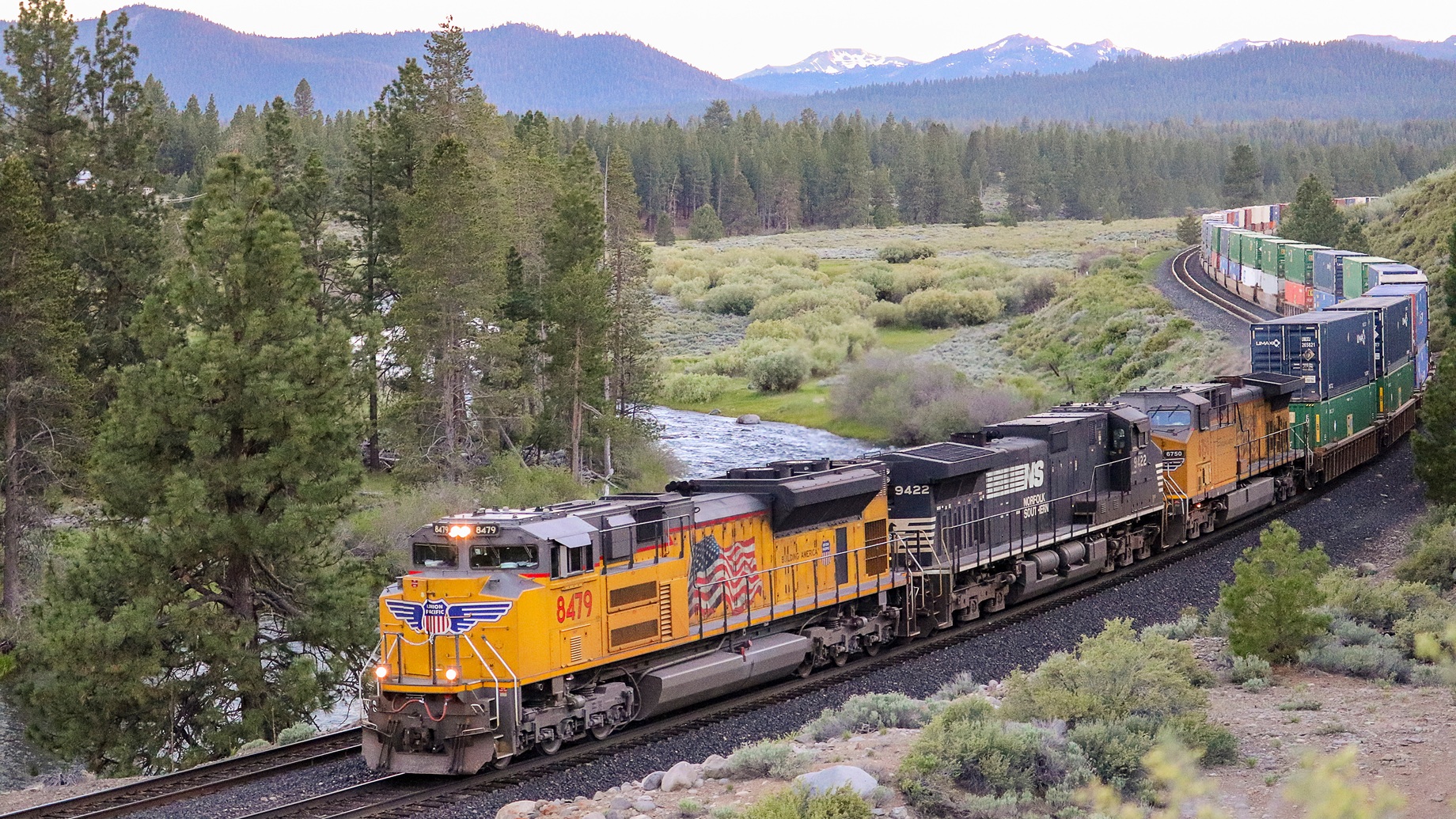
The Washington Examiner brought together a panel of leading economists, legal scholars and industry experts on April 13 to discuss the Union Pacific-Norfolk Southern combination — and what it could mean for the future of American commerce, agriculture and infrastructure.
Washington Examiner Executive Editor Bob Cusack moderated the discussion, which featured Ashley Baker, executive director at the Committee for Justice and founder of the Alliance on Antitrust; Michael Toth, research director at the Civitas Institute at the University of Texas, Austin; Professor Michael Gorman, the Charles R. and Patricia R. Niehaus Chair in Business Analytics and Operations Management at the University of Dayton; and Dr. Paul Prentice, former United States Department of Agriculture (USDA) chief macroeconomist.
The discussion focused on the vast array of benefits the combination will bring to America, with a specific focus on how the transaction will ultimately strengthen supply chains, reduce shipper-dependence on long-distance trucking by providing a stronger competitor product to trucks, and potential benefits to agricultural operations.
A Complementary Combination
The panel agreed the combination represents a natural fit between two railroads that largely serve different parts of the country. Baker, an antitrust expert, pushed back on some critics who rely on "counting firms" to assess competitive impact.
"We're going from six firms to five firms... that doesn't really have any meaningful impact on competition, or who competes with whom," she said. She added that the two railroads are more complementary than overlapping: "We have one line mostly operating the West Coast and one mostly on the East. There's a very small amount of overlap between the two."
Real Competition on the Rails
The Civitas Institute’s Toth framed the combination of the two companies’ competitive significance in broader terms.
"The real competition is between truck and rail," he said, "and this is going to provide a real competitor to trucking. And competition, of course, brings prices down. So, from a consumer welfare standpoint, that's what matters."
Fewer Trucks, Better Infrastructure
Professor Gorman, a supply chain and freight rail specialist who also noted he had previously worked for BNSF earlier in his career, made the environmental and infrastructure case for shifting freight to rail.
"This is really an opportunity for us to get trucks off the road," he said. "Trucks are a thousand times more dangerous, they're ten times more polluting. They do damage to our roads. They cause tons of congestion. And if we had a rail option that could get you [across the country] to Philadelphia quicker... then maybe we could get some trucks off the roads."
Good News for American Agriculture
Dr. Prentice addressed agricultural concerns directly, citing a 2025 University of Illinois Extension literature review finding that previous rail mergers following the Staggers Act produced greater efficiency and stable-to-lower rates — not higher ones in the ag space.
"Transport cost reductions accompany mergers," he noted. He closed with a broader argument for the merger's national importance: "A strong agricultural sector and food security ties in with national security. So, there are a lot of reasons to look at this coast-to-coast, integrated railway system. I think it's a great idea, and farmers will benefit, consumers will benefit, and it'll make our economy stronger."
Looking Ahead
The discussion highlighted that the Union Pacific-Norfolk Southern combination has earned the support of a number of leading voices in antitrust law, supply chain economics and agricultural policy.
As the companies move toward refiling their application, the panelists indicated that they expect a thorough review by the Surface Transportation Board of the wide-ranging benefits America’s first transcontinental railroad will bring to shippers, farmers and communities across the country.
Washington Examiner Executive Editor Bob Cusack moderated the discussion, which featured Ashley Baker, executive director at the Committee for Justice and founder of the Alliance on Antitrust; Michael Toth, research director at the Civitas Institute at the University of Texas, Austin; Professor Michael Gorman, the Charles R. and Patricia R. Niehaus Chair in Business Analytics and Operations Management at the University of Dayton; and Dr. Paul Prentice, former United States Department of Agriculture (USDA) chief macroeconomist.
The discussion focused on the vast array of benefits the combination will bring to America, with a specific focus on how the transaction will ultimately strengthen supply chains, reduce shipper-dependence on long-distance trucking by providing a stronger competitor product to trucks, and potential benefits to agricultural operations.
A Complementary Combination
The panel agreed the combination represents a natural fit between two railroads that largely serve different parts of the country. Baker, an antitrust expert, pushed back on some critics who rely on "counting firms" to assess competitive impact.
"We're going from six firms to five firms... that doesn't really have any meaningful impact on competition, or who competes with whom," she said. She added that the two railroads are more complementary than overlapping: "We have one line mostly operating the West Coast and one mostly on the East. There's a very small amount of overlap between the two."
Real Competition on the Rails
The Civitas Institute’s Toth framed the combination of the two companies’ competitive significance in broader terms.
"The real competition is between truck and rail," he said, "and this is going to provide a real competitor to trucking. And competition, of course, brings prices down. So, from a consumer welfare standpoint, that's what matters."
Fewer Trucks, Better Infrastructure
Professor Gorman, a supply chain and freight rail specialist who also noted he had previously worked for BNSF earlier in his career, made the environmental and infrastructure case for shifting freight to rail.
"This is really an opportunity for us to get trucks off the road," he said. "Trucks are a thousand times more dangerous, they're ten times more polluting. They do damage to our roads. They cause tons of congestion. And if we had a rail option that could get you [across the country] to Philadelphia quicker... then maybe we could get some trucks off the roads."
Good News for American Agriculture
Dr. Prentice addressed agricultural concerns directly, citing a 2025 University of Illinois Extension literature review finding that previous rail mergers following the Staggers Act produced greater efficiency and stable-to-lower rates — not higher ones in the ag space.
"Transport cost reductions accompany mergers," he noted. He closed with a broader argument for the merger's national importance: "A strong agricultural sector and food security ties in with national security. So, there are a lot of reasons to look at this coast-to-coast, integrated railway system. I think it's a great idea, and farmers will benefit, consumers will benefit, and it'll make our economy stronger."
Looking Ahead
The discussion highlighted that the Union Pacific-Norfolk Southern combination has earned the support of a number of leading voices in antitrust law, supply chain economics and agricultural policy.
As the companies move toward refiling their application, the panelists indicated that they expect a thorough review by the Surface Transportation Board of the wide-ranging benefits America’s first transcontinental railroad will bring to shippers, farmers and communities across the country.