Record-Breaking Stakeholder Support Fuels Momentum for Union Pacific–Norfolk Southern Merger
Key Takeaways:
- A seamless transcontinental network expands freight options. The combination would create America’s first single-line coast-to-coast railroad with new lanes, faster routing and broader market access.
- Single-line service reduces supply chain friction. Fewer handoffs and more direct routing are designed to improve speed, reliability and efficiency for long-distance freight movement.
- The proposed combination strengthens American competitiveness.The applicationhighlights supply chain growth, new union jobs, and expanded rail capacity as long-term economic benefits.
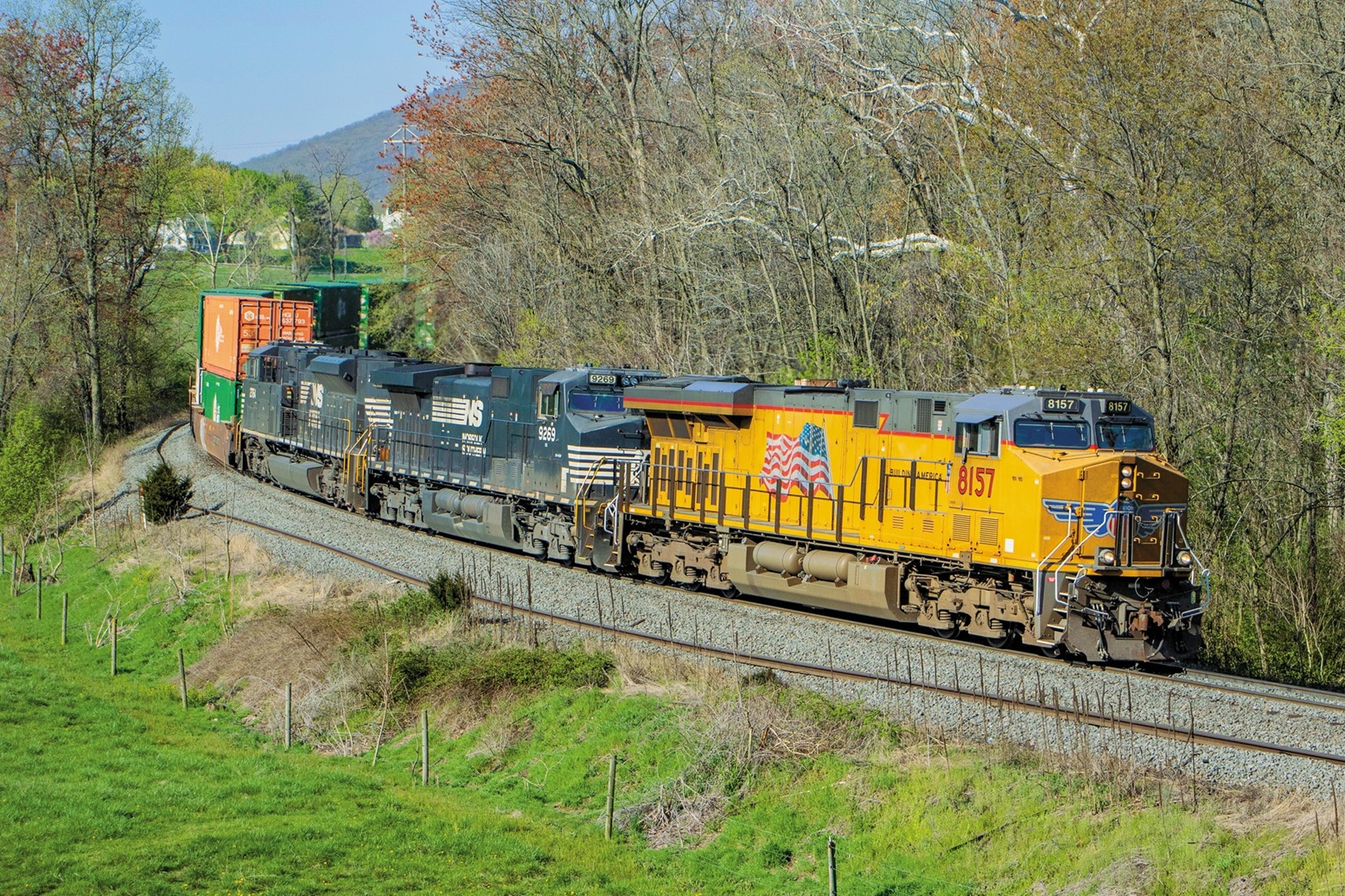
Combination will Strengthen U.S. supply chains, support domestic economic growth and enhance national competitiveness
Will enable faster, more reliable nationwide freight movement on a single, integrated rail system
Will lower transportation and shipping costs through greater efficiency, delivering savings to businesses and American consumers
OMAHA & ATLANTA, June 2, 2026 – Union Pacific Corporation (NYSE: UNP) and Norfolk Southern Corporation (NYSE: NSC) today highlighted significant stakeholder support for the creation of a transcontinental railroad following the Surface Transportation Board’s (STB) decision to accept their merger application.
Over 2,000 letters were submitted to the STB docket, highlighting commentary by a growing number of industry experts, policymakers, and academics, weighing in on the transformational merger’s ability to strengthen the U.S. supply chain and unleash growth for the American economy.1 America’s first true transcontinental railroad will expand access to more reliable freight transportation, enhance competition with long-haul trucking and deliver meaningful public benefits. From improving supply chain efficiency and lowering costs for shippers and consumers to reducing congestion and emissions, these perspectives underscore the broader national importance of a more efficient and connected rail system.
For additional information on Union Pacific and Norfolk Southern merger’s benefits, please visit AmericasGreatConnection.com.
Recent public support for the combination:
Growing America’s Economy
“Just as America’s investment in wireless created jobs, so would the Union Pacific-Norfolk Southern combination. The companies have committed to protecting every existing union job “for life” and expect to create another 1,200 jobs within three years of the deal’s execution.
"The federal Surface Transportation Board recently accepted Union Pacific’s merger application, kicking off a regulatory process aimed at determining whether the merger serves the public interest. Regulators should also consider the competitive global landscape. Other countries, including Canada and Brazil, have invested heavily in modern, unified freight systems that move goods faster and more efficiently. If America wants to remain competitive in manufacturing, agriculture and exports, it cannot rely on an outdated, disjointed rail structure.”
Michael O’Rielly, Former Commissioner of the Federal Communications Commission (Washington Post, 5.29.26)
“The combined network is expected to offer more direct routes and greater flexibility, minimizing the riskof service disruptions ... and enabling us to deliver more goods to more customers, faster.”
Peabody, a Union Pacific Customer (Letter to STB)
“The merger is also expected to shift an estimated 2 million truckloads from highways to rail. This would ease congestion on already crowded roads, reduce wear on taxpayer-funded infrastructure and improve safety and air quality across our region. Equally important, the combined network would expand acces to efficient freight service in underserved areas. A unified digital platform and end-to-end service would give customers one accountable partner for their entire shipment — bringing a more modern, transparent and efficient approach to freight transportation.
"These improvements matter deeply to Illinois’ diverse business community, particularly Hispanic-owned enterprises that are growing rapidly in logistics, manufacturing, construction and retail. Better connectivity opens new markets, shortens delivery times and lowers transportation costs — helping small and mid-sized businesses scale, hire and compete.”
Jaime di Paulo, CEO of the Illinois Hispanic Chamber of Commerce (Chicago Sun Times, 5.26.26)
“Our port continues to grow into one of the most important logistics hubs on the East Coast. Manufacturers are investing heavily across South Carolina. Warehousing, distribution, shipping, and industrial development continue expanding throughout the Lowcountry and beyond. But economic growth depends on infrastructure keeping pace with demand. A modern economy cannot operate on an outdated or fragmented freight system…. The reality is simple: stronger freight rail means stronger economic growth.”
Kyle Johnson, Owner of Five River Outfitters and Conservative Activist (Holy Sinner City, 5.22.26)
“The STB should approve this merger. The data says so. History says so. And America’s farm economy is counting on it.”
Paul Prentice, Former Chief Macro-Economist at the USDA (Agri-pulse, 5.7.26)
“Approving the Union Pacific–Norfolk Southern merger would show that America is serious about modernizing the systems that power its economy. That is the kind of decision that lowers costs, strengthens supply chains, and keeps the U.S. competitive.”
Drew Bond, Executive Chairman and Co-founder of C3 Solutions (Washington Examiner, 5.5.26)
“Today, by linking our major freight networks into a seamless coast-to-coast system, the rail industry will eliminate costly interchanges that define our fragmented rail structure. Goods that face delays, inefficiencies, and added costs will soon move across the country on a single, integrated network.
Our policymakers are working to improve supply chain resilience, increase domestic manufacturing, and cut costs for all Americans. That means logistics has become a critical economic variable. By reducing inefficiencies, the rail merger will help lower transportation costs, speed the movement of goods, and enable large-scale industrial activity that is important for long-term economic strength.”
Andrew Langer, President of the Institute for Liberty (Townhall, 4.3.26)
"Increases in efficiency from an integrated rail system also matter when it comes to cost. Transportation is one of the largest expenses faced by agricultural producers. Improved coordination and streamlined routes can help lower shipping costs, reduce delays and improve overall supply chain performance.These benefits allow S.C. farmers to remain competitive with producers in other regions while still meeting the demands of a growing market.
More broadly, a stronger rail network supports rural economic growth and long-term private investment. Reliable transportation encourages agricultural expansion, attracts new processing facilities and creates jobs in rural communities that depend on the industry. For a state built on farming and production, these investments provide opportunities and long-term stability."
U.S. Rep. Randy Ligon (SC), (The Post and Courier, 2.17.26)
“…this historic merger between Union Pacific and Norfolk Southern is an opportunity for the Surface Transportation Board to upgrade critical infrastructure and send the right message on affordability.”
Michael Toth, Director of Research at the Civitas Institute (The Wall Street Journal, 1.5.26)
"We transport onions and potatoes to markets in the Northeast... By eliminating interchanges where railcars are handed off, the combination will remove several days from transit times, enabling us to deliver more goods to more customers, faster.”
O&R Produce Farm (Letter to STB)
“Our company depends on efficient, reliable and cost-effective rail service to meet the needs of our customers... The combined network will offer more direct routes and greater flexibility, minimizing the risk of service disruptions.”
Larsen Farms Hay Terminal (Letter to STB)
“The proposed merger between Union Pacific and Norfolk Southern has the potential to improve rail connectivity, increase reliability and spur efficiency by creating a more integrated network with fewer interchanges and better coordination in both operations and future investments in the rail network.”
America’s Power (Letter to STB)
Driving Competition
“Nissan relies on consistent, cost-effective rail service to ensure the safe and timely delivery of vehicles to customers throughout North America and global markets. The U.S. freight rail network is essential to our operations, allowing us to move high volumes with efficiency and sustainability. We also recognize the importance of continued investment and innovation within the rail industry to support long-term growth, resiliency and competitiveness. We believe this proposed merger will deliver meaningful benefits to shippers like Nissan, including broader geographic access that will enhance our ability to serve existing markets while unlocking new opportunities for growth.”
Todd Myers, Director – Finished Vehicle Logistics and Logistics Purchasing, Nissan, Union Pacific Customer (Letter to STB)
“The fundamental challenge facing American freight is … a system shaped by competing rail barons and the territorial rivalries of a bygone era. Long-haul shipments often cross multiple railroads before reaching their destination. Each interchange point adds time, cost, and uncertainty. Shippers absorb those costs. Retailers do as well. And consumers absorb them too, usually without knowing it. The AmericanTransportation Research Institute calculated that highway congestion alone added more than $108 billion to trucking industry costs in a single year. These costs do not stay on the loading dock. They flow through every layer of the supply chain….Union Pacific has traditionally served the western half of the country, while Norfolk Southern serves eastern ports and industrial centers — which means a combined network would likely reduce inefficiencies, providing shippers with more reliable schedules, fewer handoffs, and better end-to-end visibility. Those improvements translate into real savings that ultimately show up inconsumer prices.”
Brigham A. McCown, Founder and Chairman of the Alliance for Innovation and Infrastructure(Aii.org), (Fortune 5.21.26)
“The consumer case for this merger is straightforward. Rail shipping costs less than trucking, and those savings work their way through the supply chain. The company's amended Surface Transportation Board application projects $3.5 billion in annual savings for shippers, driven largely by diverting more than 2million truckloads of long-haul freight to rail."
Aiden Buzzetti, President of 1776 Project Foundation & Bull Moose Project (The Blaze, 5.14.26)
“The merger would potentially make rail genuinely competitive for long-haul container shipments that currently default to the road because rail transport would be unreliable… This is, in effect, infrastructure policy achieved through private action: It requires no highway bill, federal appropriation or regulatory mandate. A railroad that is more efficient and can maintain lower rates and induce more shippers to choose rail over trucks.”
Michael Gorman, Niehaus Chair in Operations and Analytics and Professor at University of Dayton (Progressive Railroading, 5.7.26)
“…it’s evident that railroad companies made better by mergers could greatly enhance the movement of goods to all our betterment. That on its own is appealing, but much more appealing is that perhaps through enhanced competition for its outsize role in moving goods around the country, the trucking industry will improve how it operates so that freeways dense with trucks are rendered safer by theirpresence.”
John Tamny, President of Parkview Institute and Editor at RealClearMarkets (Forbes, 5.5.26)
"In a competitive global environment, a more integrated rail network expands options for shippers. It makes rail more viable relative to long-haul trucking. It strengthens reliability at a time when supply chain resilience is vital. This merger literally unifies opportunities for jobs, investments, security and economic growth from Virginia to the Pacific."
Former VA Gov. and U.S. Sen. George Allen (The Virginian Pilot 4.25.26)
“Efficiency in these markets occurs when there are fewer, larger firms. You see this in electricity, airlines, telecom, container shipping, and rail… This brings us to the merger. From an economic standpoint, this is a response to coordination problems. Eliminating handoffs reduces transaction costs and improves competition against trucks.”
Danielle Zanzalari, Assistant Professor of Economics at Seton Hall University, (National Coal Transportation Association Conference, 4.22.26)
“Overregulation or reflexive opposition to mergers risks dulling the very forces that make markets work. The Nobel Prize-winning economist Friedrich Hayek cautioned against the hubris of central planning, where authorities impose their preferred structures instead of letting rivalry and discovery run their course. The STB should heed that warning. This merger is not about protecting incumbents; it is about empowering competition between modes of transport, giving shippers more leverage, and driving costs down for consumers. The statutory framework does not ask whether a merger is politically popular or ideologically comfortable. It asks whether the merger serves the public interest. By broadening options, strengthening rail–truck competition, and lowering costs, the Union Pacific–Norfolk Southern merger does exactly that.”
Ashley Baker, Executive Director at the Committee for Justice (National Law Review, 9.16.25)
Transaction Details
The transaction remains subject to STB review and approval and will be subject to continuing STB oversight post-closure. The Union Pacific and Norfolk Southern application to the STB is available for public review on its website.
Union Pacific and Norfolk Southern will continue working closely with the STB to provide any requested information and further strengthen the record. Under the governing statute, the STB has 12 months from the date it publishes its acceptance to complete its evidentiary proceedings, providing a clear and defined path forward regardless of the timing of individual steps.
The two companies expect the transaction to be completed in mid-2027.
Read the full Agri-Pulse opinion piece.
Union Pacific (NYSE: UNP) delivers the goods families and businesses use every day with safe, reliable and efficient service. Operating in 23 western states, the company connects its customers and communities to the global economy. Trains are the most environmentally responsible way to move freight, helping Union Pacific protect future generations. More information about Union Pacific is available at www.up.com.
About Norfolk Southern
Since 1827, Norfolk Southern Corporation (NYSE: NSC) and its predecessor companies have safely moved the goods and materials that drive the U.S. economy. Today, it operates a 22-state freight transportation network. Committed to furthering sustainability, Norfolk Southern helps its customers avoid approximately 15 million tons of yearly carbon emissions by shipping via rail. Its dedicated team members deliver approximately 7 million carloads annually, from agriculture to consumer goods. Norfolk Southern also has the most extensive intermodal network in the eastern U.S. It serves a majority of the country's population and manufacturing base, with connections to every major container port on the Atlantic coast as well as major ports across the Gulf Coast and Great Lakes. Learn more by visiting www.NorfolkSouthern.com
Union Pacific Media Contact: media@up.com
Union Pacific Investor Inquiries:
Diana Prauner
402-544-4227 or dprauner@up.com
Norfolk Southern Media Inquiries: media.relations@nscorp.com
Norfolk Southern Investor Inquiries: Investor Relations