U.S. Freight Rail Will Grow When Its Structure Stops Working Against It
Author: Mike McClellan, Senior Vice President & Chief Strategy Officer, Norfolk Southern | May 5, 2026
Key Takeaways:
● The U.S. freight rail system is structurally fragmented, causing inefficiencies that push freight to trucks even though rail is safer, cleaner, and more efficient.
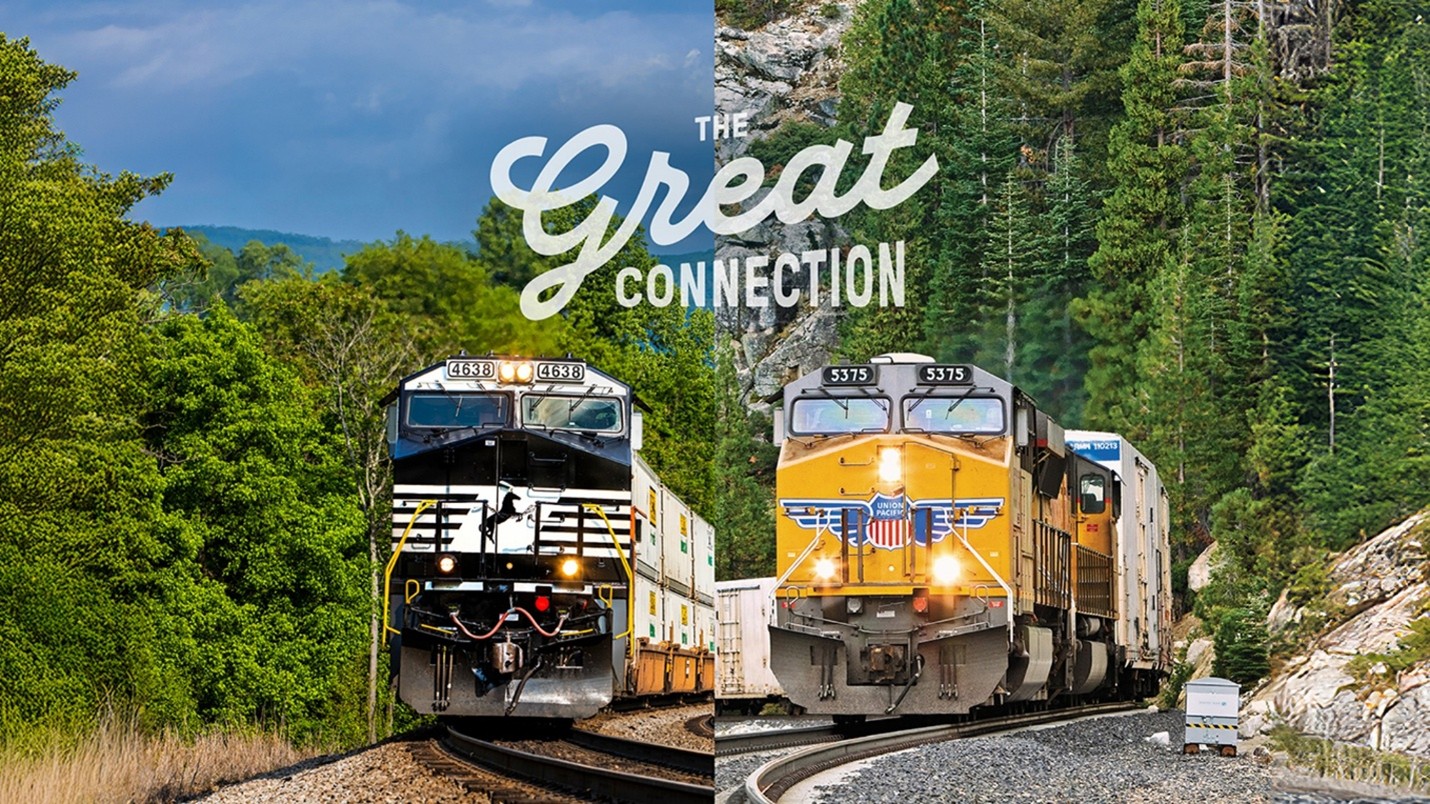
● The proposed Union Pacific–Norfolk Southern merger aims to create a unified, coast‑to‑coast network that improves reliability, reduces handoffs, and helps rail compete more effectively with trucking.
● Lessons from past mergers and modern planning tools position this integration to unlock growth, expand service, and strengthen rail’s role in America’s long‑term economic future.
● The U.S. freight rail system is structurally fragmented, causing inefficiencies that push freight to trucks even though rail is safer, cleaner, and more efficient.
● The proposed Union Pacific–Norfolk Southern merger aims to create a unified, coast‑to‑coast network that improves reliability, reduces handoffs, and helps rail compete more effectively with trucking.
● Lessons from past mergers and modern planning tools position this integration to unlock growth, expand service, and strengthen rail’s role in America’s long‑term economic future.

Mike McClellan
A Merger Designed to Unlock Growth
That structural limit is exactly what the proposed Union Pacific–Norfolk Southern merger is designed to address. This is not a merger born of weakness. Quite the opposite. Both companies are financially strong and operate largely complementary networks. The motivation isn’t survival. It’s serving our customers and the American economy better and unlocking growth. Specifically, growth that allows rail to compete more effectively with trucking by offering single‑line, transcontinental service that simplifies logistics, reduces handling, and improves reliability. That’s what our customers want.
Lessons from Long-Term Rail Investment
I’ve spent much of my career planning long‑term rail investments – projects that take years to pay off and require discipline, patience, and an honest understanding of network economics. One lesson stands out: good intentions aren’t enough. Our industry has tried to bridge network gaps through joint ventures, marketing agreements, and cooperative arrangements. Some work, especially those that involve meaningful commitment of capital and control. However, most others do not, especially when economic conditions change, or there are changes in leadership, strategy and priorities of one or both parties. I’ve helped launch more than 20 such ventures in my career. Some succeeded. Some didn’t. The pattern is clear: when incentives aren’t fully aligned and commitment is optional, these ventures can unravel.
Why a Unified Network Changes the Equation
A merger changes that equation.
With a unified network, capital decisions are made with the entire system in mind. That allows railroads to invest more confidently in infrastructure, technology, and service improvements that unlock new lanes and markets. It also allows us to eliminate inefficiencies that coordination alone simply can’t fix.
Public Benefits of a Seamless Rail Network
Those efficiencies translate directly into public benefits. Fewer handoffs mean fewer truck transfers in dense urban corridors. More direct routes mean fewer empty miles, less idling, and better fuel efficiency. When freight flows better on rail, highways work better for everyone else.
Take empty miles. By design, railroads move more empty equipment than trucks, which can triangulate routes more easily. A national rail network allows railroads to do something similar, optimizing both loaded and empty movements across the country. That’s good for service, good for efficiency, and good for the environment.
Learning From the Past - and Doing it Differently
Critics often point to rail mergers of the 1990s, which led to serious service disruptions. That history shouldn’t be ignored. I lived through it, and those experiences also taught me, and the industry, lasting lessons.
Past failures largely came down to cultural misalignment, moving too quickly, and weak centralized planning. Today, we are approaching planning and integration very differently. Technology has advanced dramatically. Network modeling, operating systems, and data visibility are far more sophisticated. Most importantly, we understand that disciplined pacing matters – doing things in the right order, at the right time.
Recent experience bears that out. The Canadian Pacific–Kansas City Southern merger showed that careful, well‑planned integration can expand service and create new growth opportunities. No one has looked back at that merger, despite temporary disruptions at the outset, and said… “They never should’ve done that merger.” Growth followed.
A Deliberate, Pro-Growth Vision
Our team has deliberately analyzed all our industry’s history, and the proposed Union Pacific–Norfolk Southern combination builds on those lessons. It is a thoughtful, pro‑growth plan focused on connecting new dots, launching new services, creating new lanes, reducing transit times, and making rail an easier and more compelling option for shippers who today default to trucking. Our commitment is not just to create a new map but to deliberately follow through on our vision and create a whole new level of service for our customers.
As the nation reflects on 250 years of progress, the question isn’t whether rail has a role in America’s future. It does. The real question is whether we’re willing to modernize its structure to meet today’s economic, environmental, and infrastructure realities. This merger must succeed to ensure rail is a long‑term engine of growth, resilience, and competitiveness for the next 250 years.
That structural limit is exactly what the proposed Union Pacific–Norfolk Southern merger is designed to address. This is not a merger born of weakness. Quite the opposite. Both companies are financially strong and operate largely complementary networks. The motivation isn’t survival. It’s serving our customers and the American economy better and unlocking growth. Specifically, growth that allows rail to compete more effectively with trucking by offering single‑line, transcontinental service that simplifies logistics, reduces handling, and improves reliability. That’s what our customers want.
Lessons from Long-Term Rail Investment
I’ve spent much of my career planning long‑term rail investments – projects that take years to pay off and require discipline, patience, and an honest understanding of network economics. One lesson stands out: good intentions aren’t enough. Our industry has tried to bridge network gaps through joint ventures, marketing agreements, and cooperative arrangements. Some work, especially those that involve meaningful commitment of capital and control. However, most others do not, especially when economic conditions change, or there are changes in leadership, strategy and priorities of one or both parties. I’ve helped launch more than 20 such ventures in my career. Some succeeded. Some didn’t. The pattern is clear: when incentives aren’t fully aligned and commitment is optional, these ventures can unravel.
Why a Unified Network Changes the Equation
A merger changes that equation.
With a unified network, capital decisions are made with the entire system in mind. That allows railroads to invest more confidently in infrastructure, technology, and service improvements that unlock new lanes and markets. It also allows us to eliminate inefficiencies that coordination alone simply can’t fix.
Public Benefits of a Seamless Rail Network
Those efficiencies translate directly into public benefits. Fewer handoffs mean fewer truck transfers in dense urban corridors. More direct routes mean fewer empty miles, less idling, and better fuel efficiency. When freight flows better on rail, highways work better for everyone else.
Take empty miles. By design, railroads move more empty equipment than trucks, which can triangulate routes more easily. A national rail network allows railroads to do something similar, optimizing both loaded and empty movements across the country. That’s good for service, good for efficiency, and good for the environment.
Learning From the Past - and Doing it Differently
Critics often point to rail mergers of the 1990s, which led to serious service disruptions. That history shouldn’t be ignored. I lived through it, and those experiences also taught me, and the industry, lasting lessons.
Past failures largely came down to cultural misalignment, moving too quickly, and weak centralized planning. Today, we are approaching planning and integration very differently. Technology has advanced dramatically. Network modeling, operating systems, and data visibility are far more sophisticated. Most importantly, we understand that disciplined pacing matters – doing things in the right order, at the right time.
Recent experience bears that out. The Canadian Pacific–Kansas City Southern merger showed that careful, well‑planned integration can expand service and create new growth opportunities. No one has looked back at that merger, despite temporary disruptions at the outset, and said… “They never should’ve done that merger.” Growth followed.
A Deliberate, Pro-Growth Vision
Our team has deliberately analyzed all our industry’s history, and the proposed Union Pacific–Norfolk Southern combination builds on those lessons. It is a thoughtful, pro‑growth plan focused on connecting new dots, launching new services, creating new lanes, reducing transit times, and making rail an easier and more compelling option for shippers who today default to trucking. Our commitment is not just to create a new map but to deliberately follow through on our vision and create a whole new level of service for our customers.
As the nation reflects on 250 years of progress, the question isn’t whether rail has a role in America’s future. It does. The real question is whether we’re willing to modernize its structure to meet today’s economic, environmental, and infrastructure realities. This merger must succeed to ensure rail is a long‑term engine of growth, resilience, and competitiveness for the next 250 years.
Next Read: Candid Insights: Union Pacific and Norfolk Southern CEOs Outline How a Transcontinental Railroad Will Transform U.S. Freight
Take a deeper look at the merger's impact on consumers.
Take a deeper look at the merger's impact on consumers.