Moving More with Less: The Reality of Modern Rail
● Rail is transporting greater volumes with fewer trains. Safety and efficiency are advancing together, with performance improving in critical areas.
● Rail remains the safest way to move freight over land. Freight rail is 17 times safer than trucking per gross ton mile.
● The Union Pacific-Norfolk Southern combination will provide more opportunities for innovation. Proven technologies, operational best practices and expanded training will scale across the single-line network, improving safety, reliability and network efficiency.
Key Takeaways:
- A seamless transcontinental network expands freight options. The combination would create America’s first single-line coast-to-coast railroad with new lanes, faster routing and broader market access.
- Single-line service reduces supply chain friction. Fewer handoffs and more direct routing are designed to improve speed, reliability and efficiency for long-distance freight movement.
- The proposed combination strengthens American competitiveness.The applicationhighlights supply chain growth, new union jobs, and expanded rail capacity as long-term economic benefits.
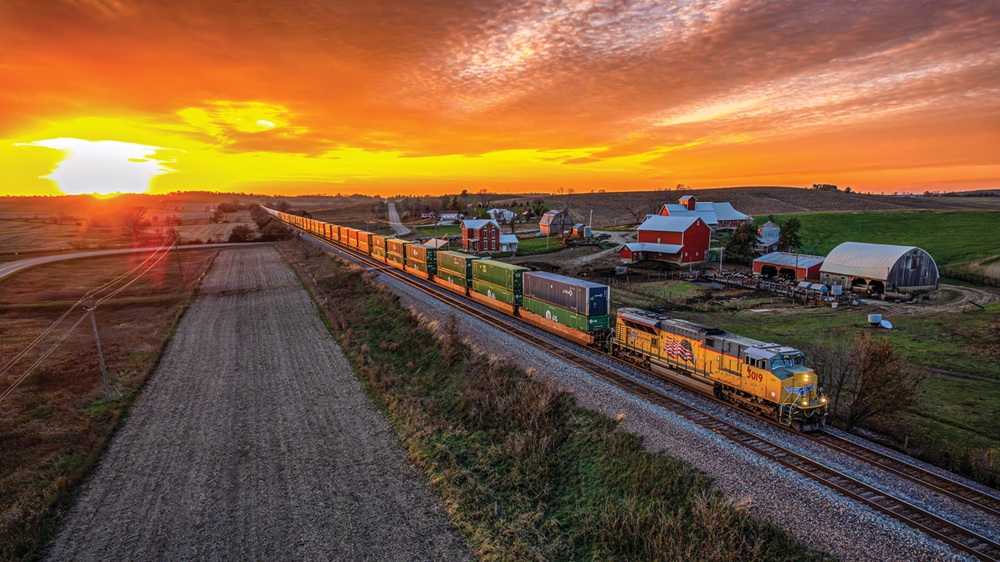
Union Pacific is proving that moving more freight doesn't require running more trains. Through smarter operations, data-driven technology and a relentless focus on safety, the railroad is transporting greater volumes with fewer trains while continuing to improve performance in critical areas.
Despite ongoing narratives about train length, the facts are clear: safety and efficiency are advancing together, and train length alone is not a driver of incident rates.
In 2025, the rail industry achieved its safest year on record, according to Federal Railroad Administration data, with Union Pacific delivering its best-ever personal injury and derailment rates — improving 24% and 19% year over year.
"People often focus on the length of a train because it's the part they can see," said Rod Doerr, chief safety officer. "What they don't see is everything that goes into building and operating that train safely — the planning, the technology, the inspections and the employees making thousands of decisions every day. That's what drives safety performance."
Rail remains the safest way to move freight over land, with an incident rate of 0.45 per 100 million gross ton miles, compared to 6.84 for trucks. According to federal data, freight rail is 17 times safer than trucking per gross ton mile.
These achievements are the product of a disciplined approach to operations, sustained investment, training and a Go Home Safe safety culture — not a single variable like train size.
Safety gains are being matched by operational improvements. Since 2019, Union Pacific has moved more freight with fewer trains, reducing active train count by 24% while increasing car velocity by 8%. Fewer trains moving faster creates a more fluid network, reduces congestion and opens capacity for customers and the broader economy.
Union Pacific employees leverage advanced analytic tools like Physics Train Builder (PTB) to make informed decisions, identify risks and operate more safely. By optimizing train makeup before it ever leaves the terminal, PTB reduces in-train forces that can contribute to equipment damage and derailments – improving safety, reliability and network efficiency.
"The goal is to build the right train for the route, the terrain and the freight we're moving,” said Eric Gehringer, Union Pacific executive vice president of Operations. “Technology helps us do that more safely and efficiently than ever before."
Looking ahead, Union Pacific is focused on building on that momentum. America’s first transcontinental railroad will create a larger platform for innovation, allowing proven technologies and operational best practices to scale across a coast-to-coast network.
"When you bring together the best of two strong railroads, everyone benefits,” Gehringer said. "We'll have more opportunities to share what works, expand training and apply proven technologies across a larger network. That's how you continue raising the bar on safety."
Visit UP.com/innovation to learn how Union Pacific continually advances technologies that aid employee decision-making, enhance safety and improve efficiency. In 2026, Union Pacific plans to invest $3.3 billion to enhance its infrastructure, technology and network reach.