Vena at Railway Interchange: Rail Must Compete for What’s Next
● A stronger coast-to-coast rail network will help freight compete more effectively in a rapidly changing transportation landscape. The combination is designed to meet customer expectations and win more freight currently moving by truck.
● Eliminating rail handoffs increases service and lowers costs. Operating freight under a single network will improve efficiency, reduce transit times and provide greater value for shippers.
● America’s first transcontinental railroad will strengthen supply chains and reduce highway congestion. The combination is expected to remove 2.1 million truckloads from roads.
Key Takeaways:
- A seamless transcontinental network expands freight options. The combination would create America’s first single-line coast-to-coast railroad with new lanes, faster routing and broader market access.
- Single-line service reduces supply chain friction. Fewer handoffs and more direct routing are designed to improve speed, reliability and efficiency for long-distance freight movement.
- The proposed combination strengthens American competitiveness.The applicationhighlights supply chain growth, new union jobs, and expanded rail capacity as long-term economic benefits.
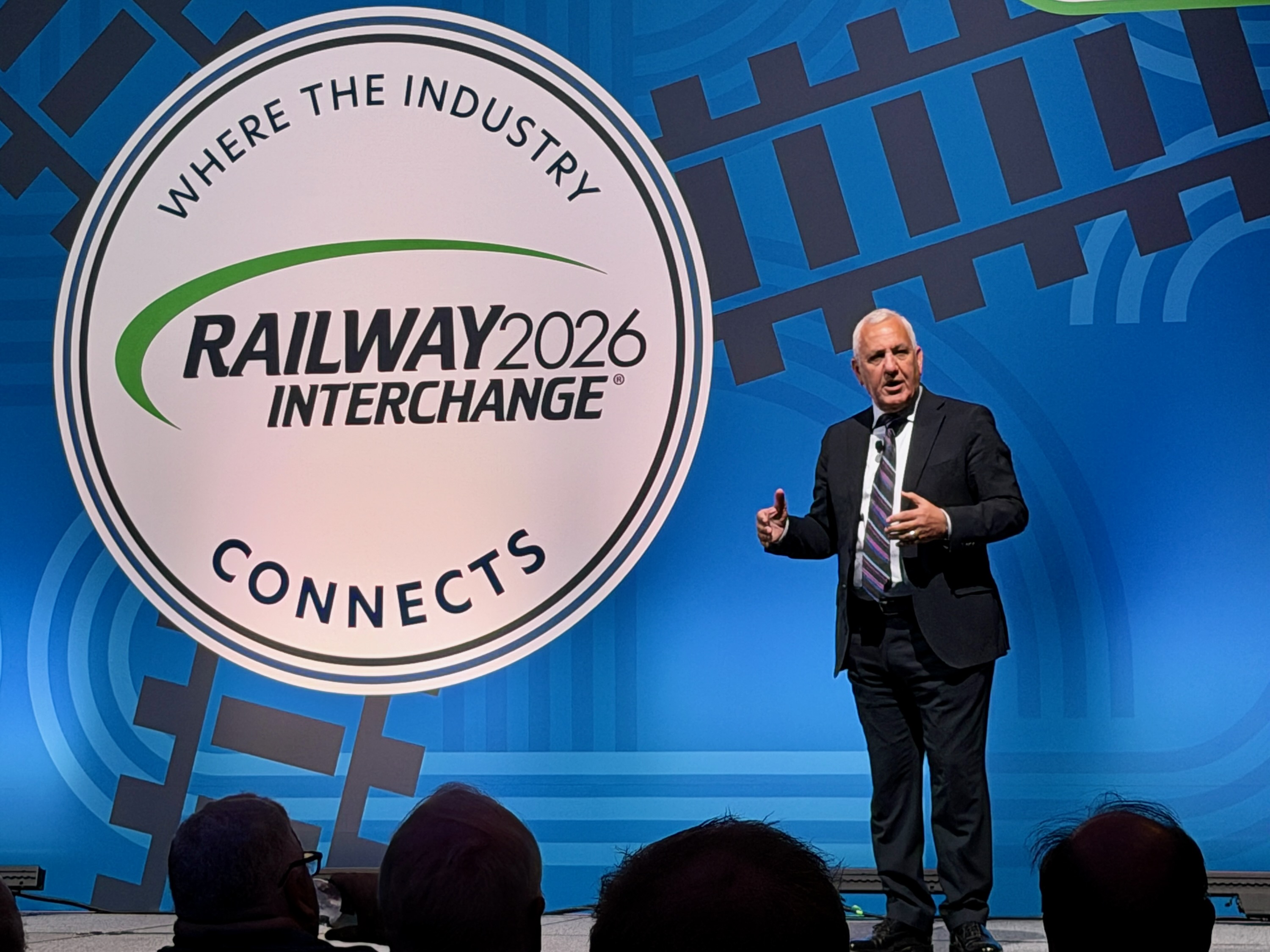
Speaking to more than 4,000 industry leaders at the 2026 Railway Interchange Conference in Omaha, Union Pacific CEO Jim Vena delivered a clear message: the competitive landscape is shifting, and rail must move now.
Vena made it clear the industry is at an inflection point: Autonomous trucks are advancing. Customer expectations are rising. Supply chains are evolving.
“Rail cannot stand still,” he said.
Rail moves about 27% of U.S. freight ton-miles today, compared to trucking’s 43% — highlighting both the competitive gap and the runway for growth. By eliminating handoffs, the Union Pacific-Norfolk Southern combination will deliver faster, end-to-end service designed to help rail reclaim share from trucks.
Running freight longer distances under a single operating plan will reduce both transit time and network costs, creating the pricing flexibility needed to compete more effectively and win truckload freight off the highway.
America’s first transcontinental railroad is projected to take approximately 2.1 million truckloads off the road, delivering cargo more safely, efficiently and sustainably.