Reliable Rail, Fewer Trucks: How Union Pacific Is Moving Idaho’s Potato Harvest
● Reliable rail service is the preferred shipping option. Customer confidence is growing and more Idaho growers are choosing rail over trucking.
● Single-line service will strengthen performance. The Union Pacific–Norfolk Southern combination will reduce handoffs, position assets where they’re needed ahead of demand, and move freight with greater speed and precision.
● More reliable rail service strengthens supply chains while reducing reliance on long-haul trucking. As freight shifts from road to rail, customers benefit from lower costs while highways see less congestion from fewer trucks.
Key Takeaways:
- A seamless transcontinental network expands freight options. The combination would create America’s first single-line coast-to-coast railroad with new lanes, faster routing and broader market access.
- Single-line service reduces supply chain friction. Fewer handoffs and more direct routing are designed to improve speed, reliability and efficiency for long-distance freight movement.
- The proposed combination strengthens American competitiveness.The applicationhighlights supply chain growth, new union jobs, and expanded rail capacity as long-term economic benefits.
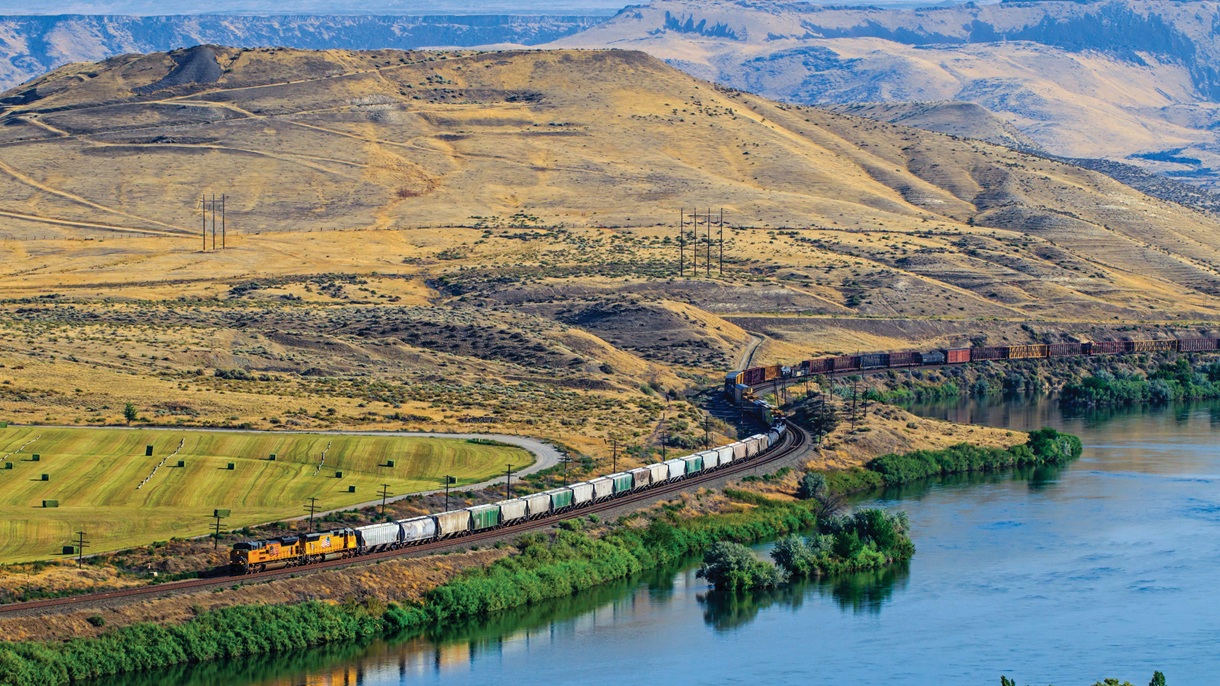
When Idaho potato farmers are ready to ship, there’s no margin for delay. Harvest comes once a year, and getting product to market on time depends on a supply chain that performs — every time.
Union Pacific is delivering that reliability. Idaho produces roughly 11 billion pounds of potatoes annually — about one-third of U.S. supply — and keeping that volume moving requires consistent, dependable service.
To meet the moment, Union Pacific solved a long-standing challenge: staging refrigerated rail cars ahead of demand so customers can get their freight moving to its destination on time. The railroad moved car supply closer to the fields, pre-positioning equipment in Idaho Falls at the center of the region’s production.
The result is simple and impactful: when customers are ready to load, rail cars are ready, too.
“Our job is to be ready when demand peaks and our customers are counting on us,” said Union Pacific’s Jason Hess, senior vice president-Marketing and Sales. “It comes down to having the right equipment in the right place at the right time.”
That consistency is cementing shipping patterns. With reliable access to equipment, more growers are choosing rail over truck. Each rail car moves the equivalent of three to four long-haul trucks, helping reduce highway congestion, lower emissions and take pressure off Idaho’s roadways — all while keeping costs in check for farmers.
As confidence grows, customers are investing alongside the railroad — upgrading facilities to handle refrigerated rail cars and shifting more volume onto the network. The shift reflects a broader truth: when service is reliable, rail is the preferred option.
“The consistent engagement from our rail partners builds trust and improves responsiveness,” said Shawn Boyle, president of the Idaho Grower Shippers Association. “Our members have greater confidence we can move product when it matters most.”
In the future, the Union Pacific–Norfolk Southern merger will strengthen that performance by operating as a single, unified system — reducing handoffs, positioning assets where they’re needed ahead of demand, and moving freight with greater speed and precision.
“Norfolk Southern has unmatched access to eastern population centers,” Hess said. “Together, we will be able to move Idaho potatoes faster, with fewer handlings and more consistency from origin to destination.”
For Idaho’s growers, it comes down to execution: dependable service that gets product to market — and more trucks off the highway — when it matters most.